RUS

Diary

Magnetic storms are expected on Earth on Friday

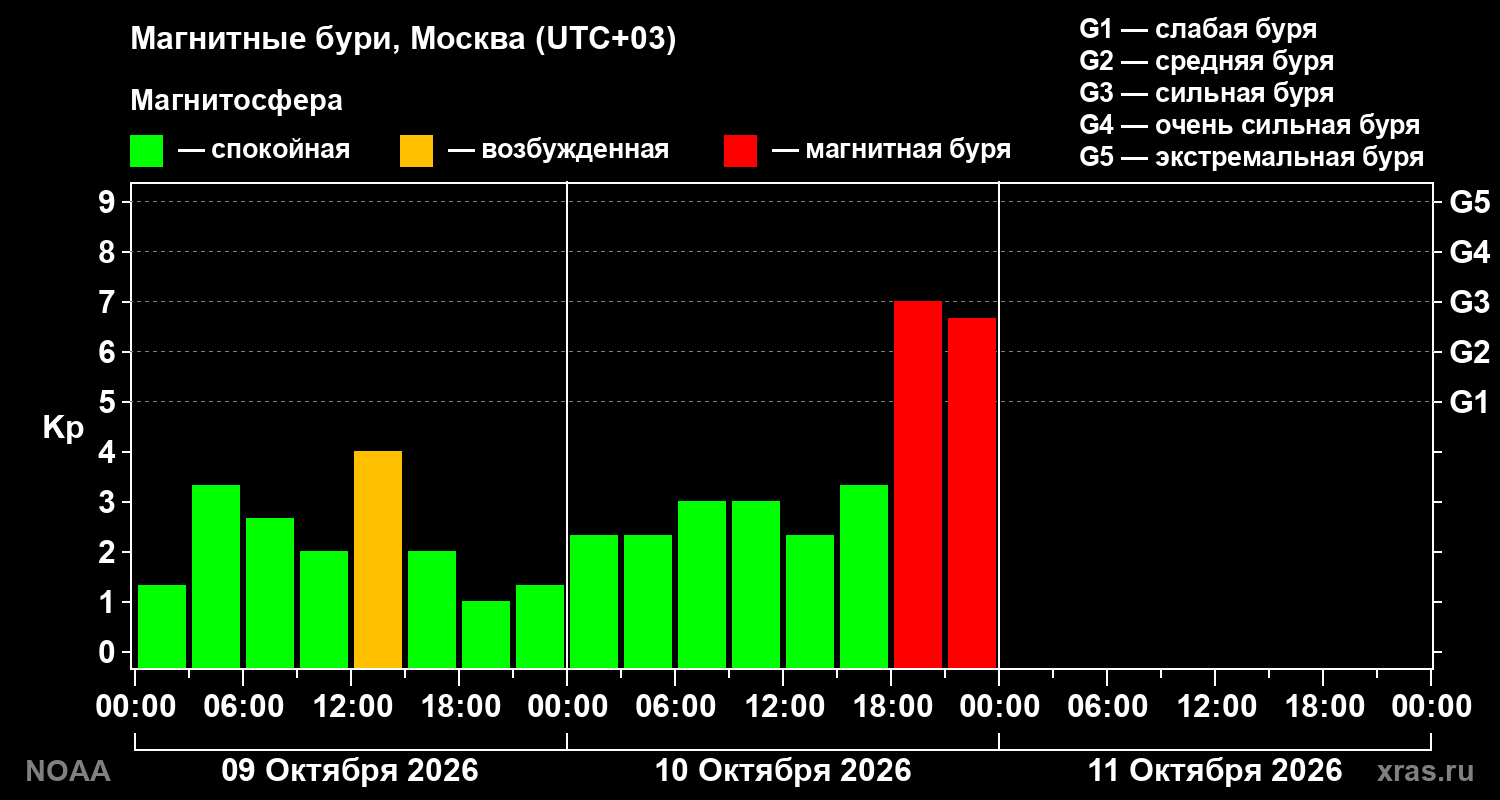
Geomagnetic storm forecast for Friday, August 28, 2026

Yesterday’s M7.0 flare, which occurred midday, turned out to be the final act of the show. Judging by the data, the Sun exhausted its remaining energy reserves in that event; activity ceased abruptly thereafter, as if a switch had been flipped. However, there is no cause for premature celebration, as the active region remains positioned directly facing Earth, fully primed—the only thing missing for further eruptions is fuel. For now, we can state with certainty that there is currently no fuel available, and the flare activity chart has shown a flat line for about 12 hours.

As is often the case, the end of the Sun's activity marks the beginning of the impact on Earth. Even traveling at immense speeds of 600–1,000 km/s, plasma ejections require two to four days to traverse the 150 million kilometers separating the Sun and Earth. Consequently, it is common for flare activity to cease while Earth is still bracing for the encounter—which is precisely the situation unfolding now. The plasma cloud ejected during yesterday’s explosion is currently en route to Earth, positioned somewhere between the orbits of Mercury and Venus; it is not expected to reach the planet until the day after tomorrow, Friday.

The impact forecast is relatively mild. The ejection speed appears to be moderate, leading to a downward revision of initial expectations—from severe G3-level storms to the more modest G1–G2 range (indicating minor to moderate events). This may be partially offset by the event's duration, however; geomagnetic disturbances are expected to persist for up to two days. This extended duration is partly due to the additional energy contribution from a coronal hole currently present on the Sun (already visible in imagery). All in all, if the Sun doesn't get plugged back in today, we can consider that things went much better than they could have. Let's keep an eye on the flare chart over the next 24 hours.