
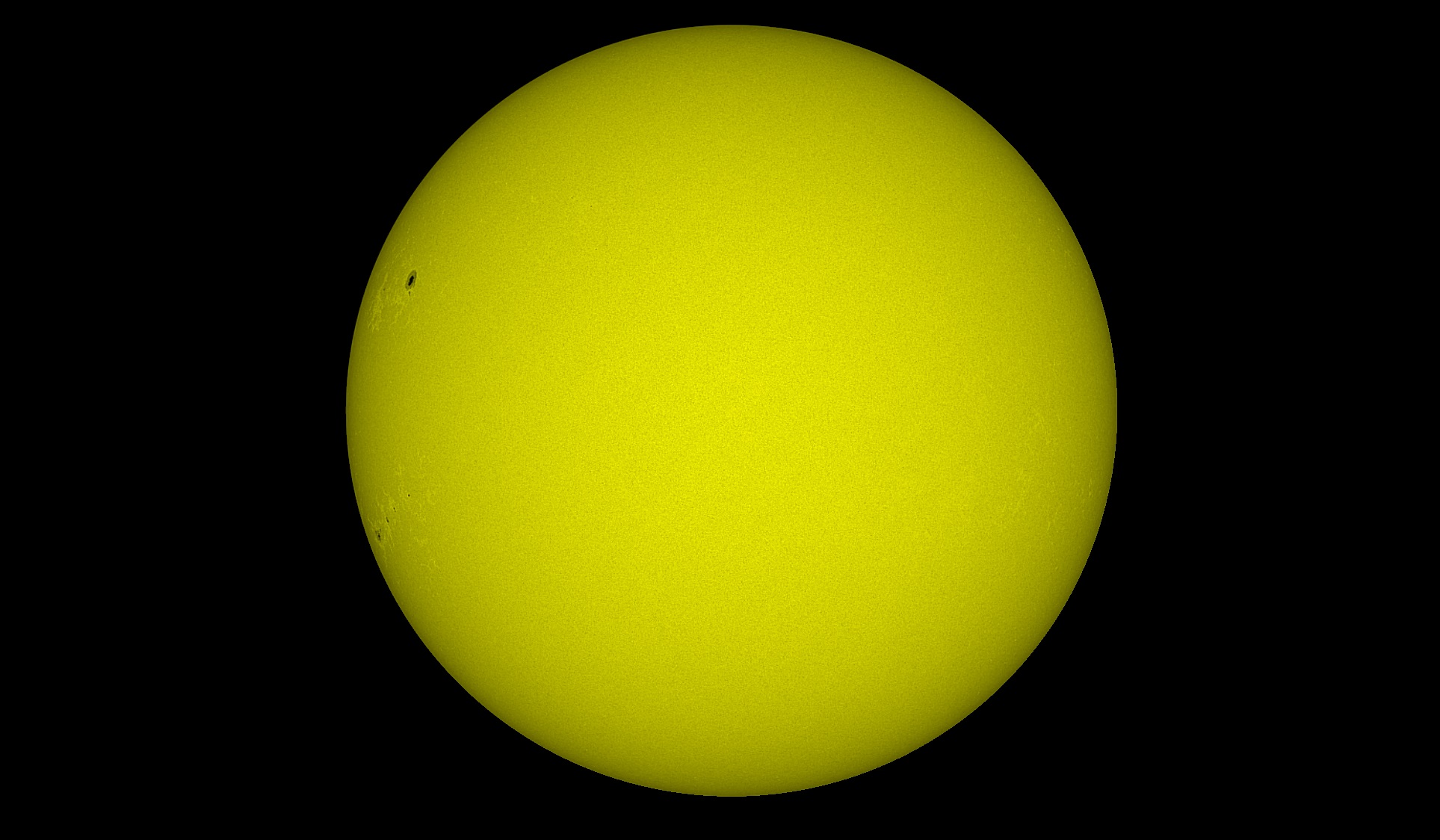
The Sun is gradually returning to its initial depression, from which even the simultaneous appearance of two sunspot groups was unable to rouse it. In one of the groups, located on the upper left edge of the Sun, active center 4366, which produced six high-level X-flares three weeks ago, can be identified only by its position on the disk. The region has completely lost its energy and is in the process of decay. It is highly likely that its remnants (essentially the last remaining sunspot) will be absorbed by the Sun within the next 5-10 days. A new active center, 4379-4380, located on the same edge but below the equator and which produced a series of nearly 20 flares upon emerging from the far side of the Sun, also completely exhausted itself in just a couple of days (apparently, it was so eager to impress that it overestimated its strength). As a result, the flare pattern is once again rapidly degenerating into a straight line.
Geomagnetic activity is currently determined solely by variations in the solar wind, which is weakly disturbed. As a result, the geomagnetic index Kp has also been slightly elevated in recent days, sometimes even reaching the yellow level. However, overall, these are hardly significant events. Globally, the Earth's magnetic field is calm.
Late February and early March 2026, it seems, will definitely not be remembered in the history of solar physics. However, there is still some minimal life on the Sun. Activity hasn't completely dropped to the bottom.