
Space weather on October 27, 2026
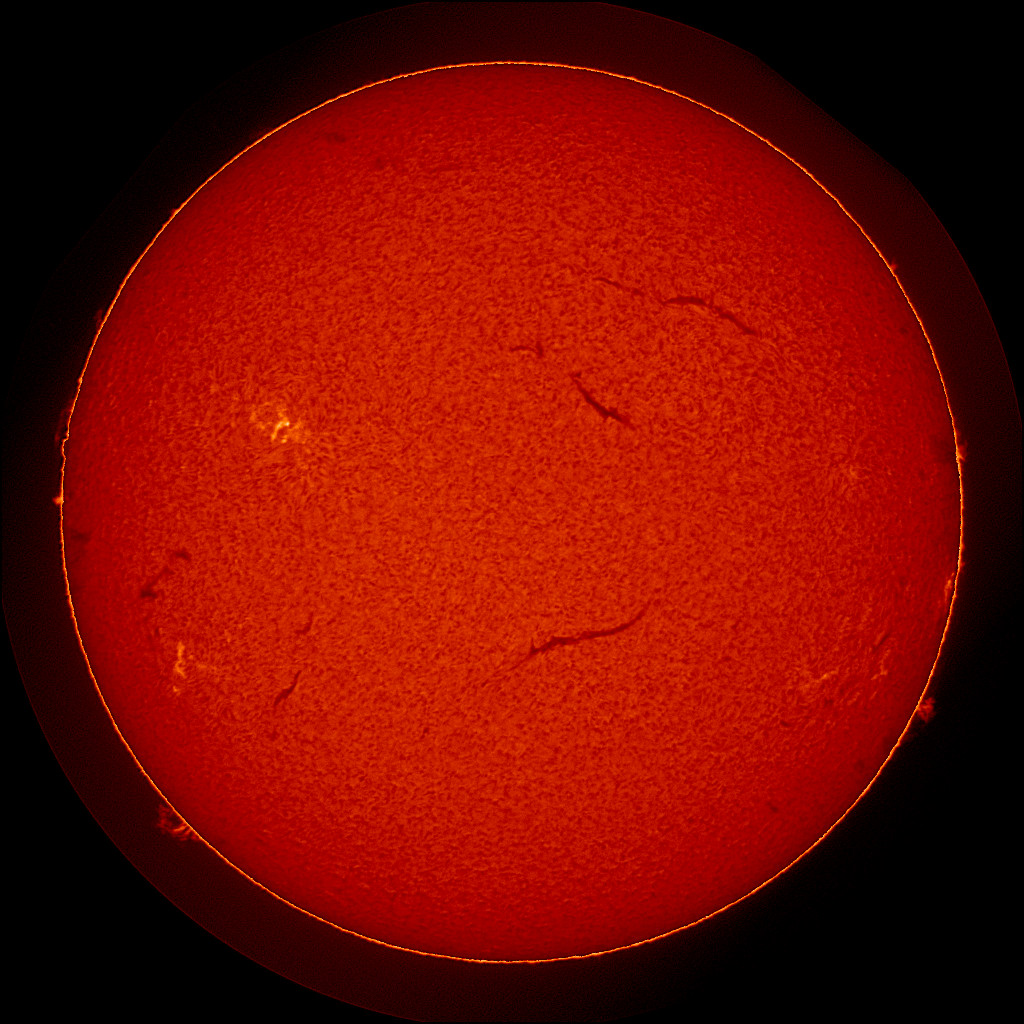
There is not much happening on the Sun. The main point of interest is whether an approaching coronal hole will be able to disturb Earth’s magnetosphere to any noticeable degree. Calculations still indicate that the planet will enter a stream of fast solar wind tomorrow, Wednesday, though the potential consequences remain highly uncertain. Overall, the event is expected to be weak, yet it could potentially reach the G1 level—the lowest category of geomagnetic storms. In any case, the probability of this occurring is greater than zero.
A year ago, such a development would likely not have warranted any attention; however, given the current state of solar quiescence, even events like this are worth monitoring. By all indications, this is the only geomagnetic event likely to occur within the next 7–10 days.
Solar flare activity is currently being sustained, albeit weakly, by two active regions that are now rotating off the visible solar disk toward the western limb. The energy release observed from these regions is the only thing preventing solar activity from dropping to zero. This factor, however, will remain relevant for at most another day or two; if nothing changes, the Sun should become completely calm by Thursday or Friday. A notable decline in the Sun’s background X-ray emission is also being observed, which points to a decrease in both the number of active regions and the average temperature of the solar corona. In short, the Sun continues its slide toward a minimum, with no local factors in sight that could intervene in this process at present.