
It's been a while, about a week, since there have been any comments on space weather, due to the generally calm solar situation. There are currently two points of view within the team. The first is that if the sun is quiet, there's no need to write anything. The second is that the absence of information is still information. Besides, how do you know nothing has happened if you don't write about it?
So, for now, the decision has been made to write short posts in any case.
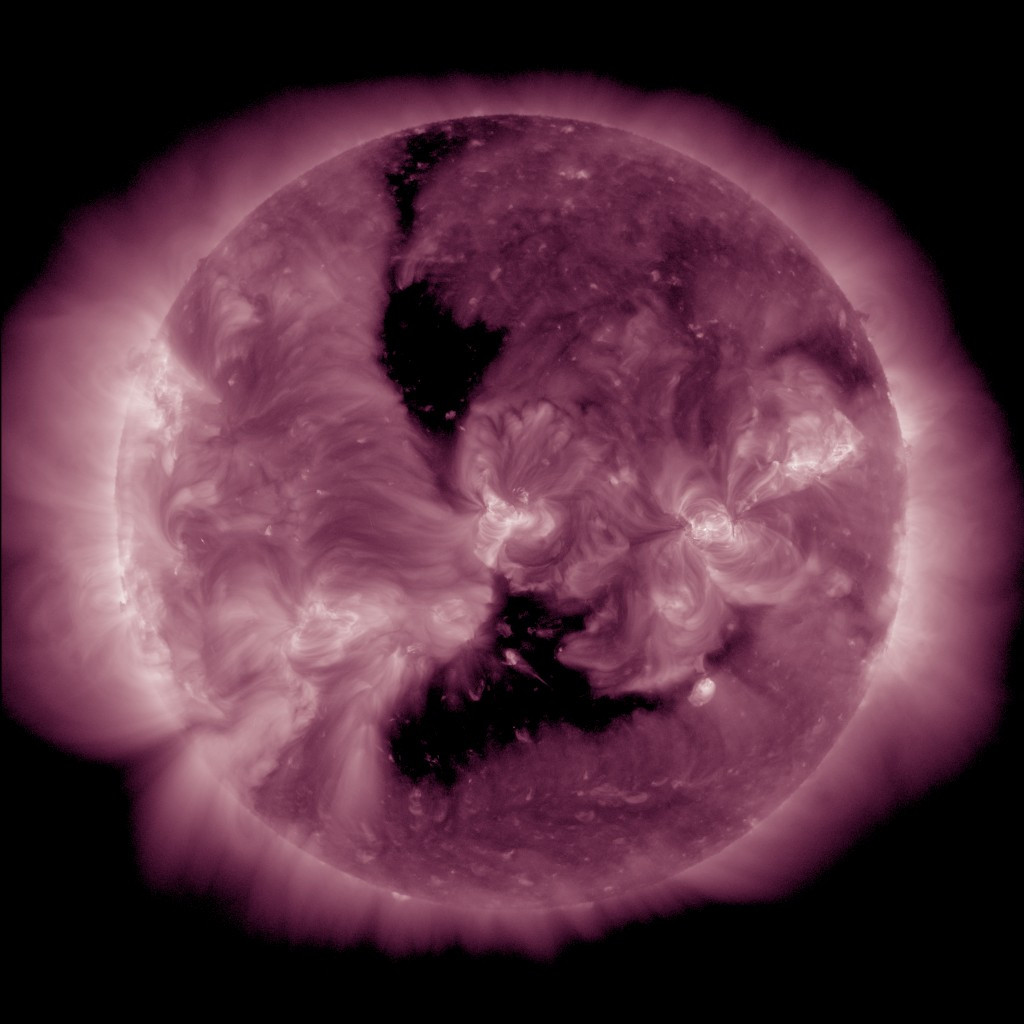
Currently, the following objects are noteworthy on the sun: two medium-sized coronal holes, two active regions in the beta-gamma category (the class preceding the highest), and one small prominence.
In terms of flare activity, the week was quiet, although there was a localized surge over the weekend. A total of 17 flares were recorded on Saturday and Sunday (compared to only nine in the first five days of the week). But this morning, it doesn't look like this will develop any further. Only one flare has occurred in the last 10 hours, so the outburst was most likely localized. Mathematical models so far confirm this. They estimate the probability of strong flares today at approximately 10-20%, while the probability of a high-level X flare is less than 1%.
The solar wind speed may begin to increase over the course of the day due to the aforementioned coronal holes. Peak speeds are expected at 500-600 km/s. While these are elevated, they are moderate, so they shouldn't have a noticeable impact on the Earth's magnetic field. The probability of weak geomagnetic disturbances is increased today and tomorrow. The probability of these disturbances reaching storm levels is about 7%, or approximately 14 to 1, that nothing will happen.
Overall, the Sun's condition appears typical for the current stage of the cycle. It is neither active nor calm—just as it should be. To bring it out of this state (both downwards and upwards) requires reasons that don't exist yet. We'll see.