
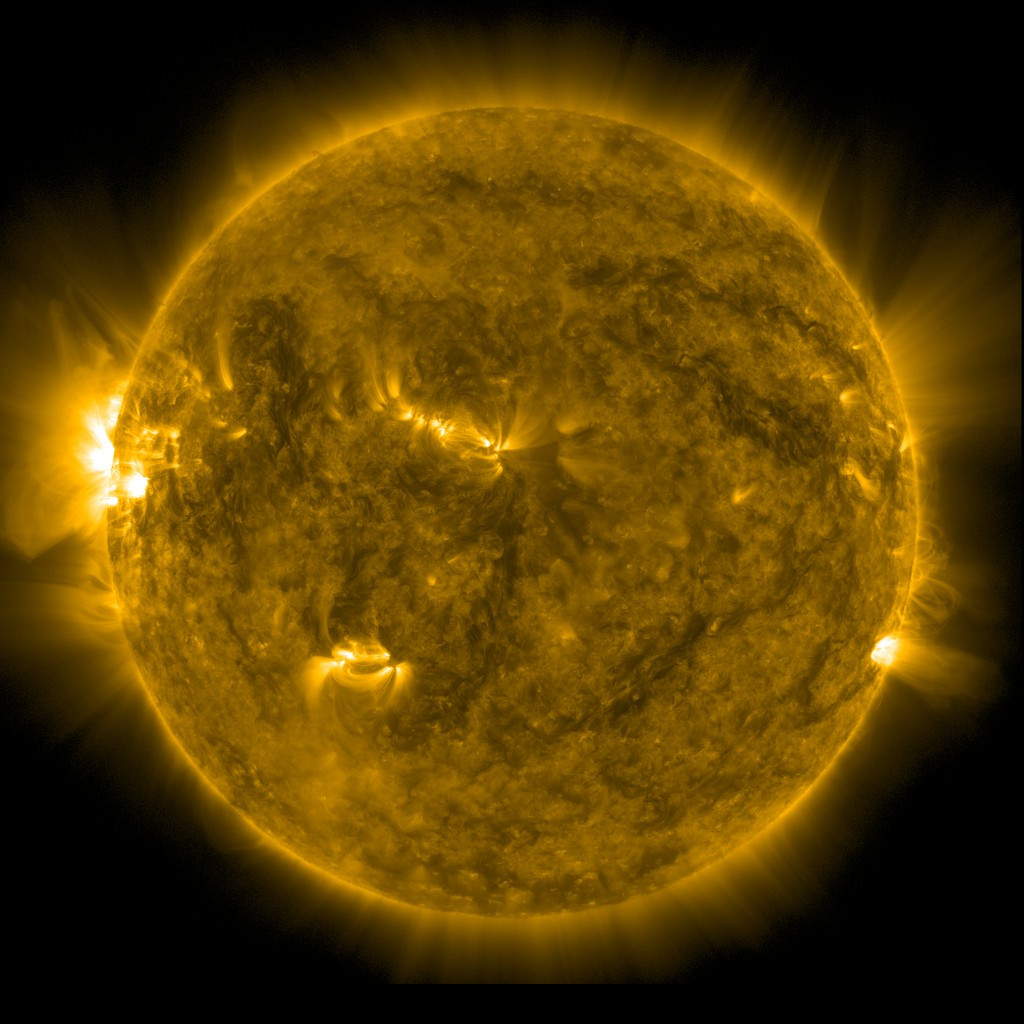
Over the past 24 hours, there have been two noteworthy developments.
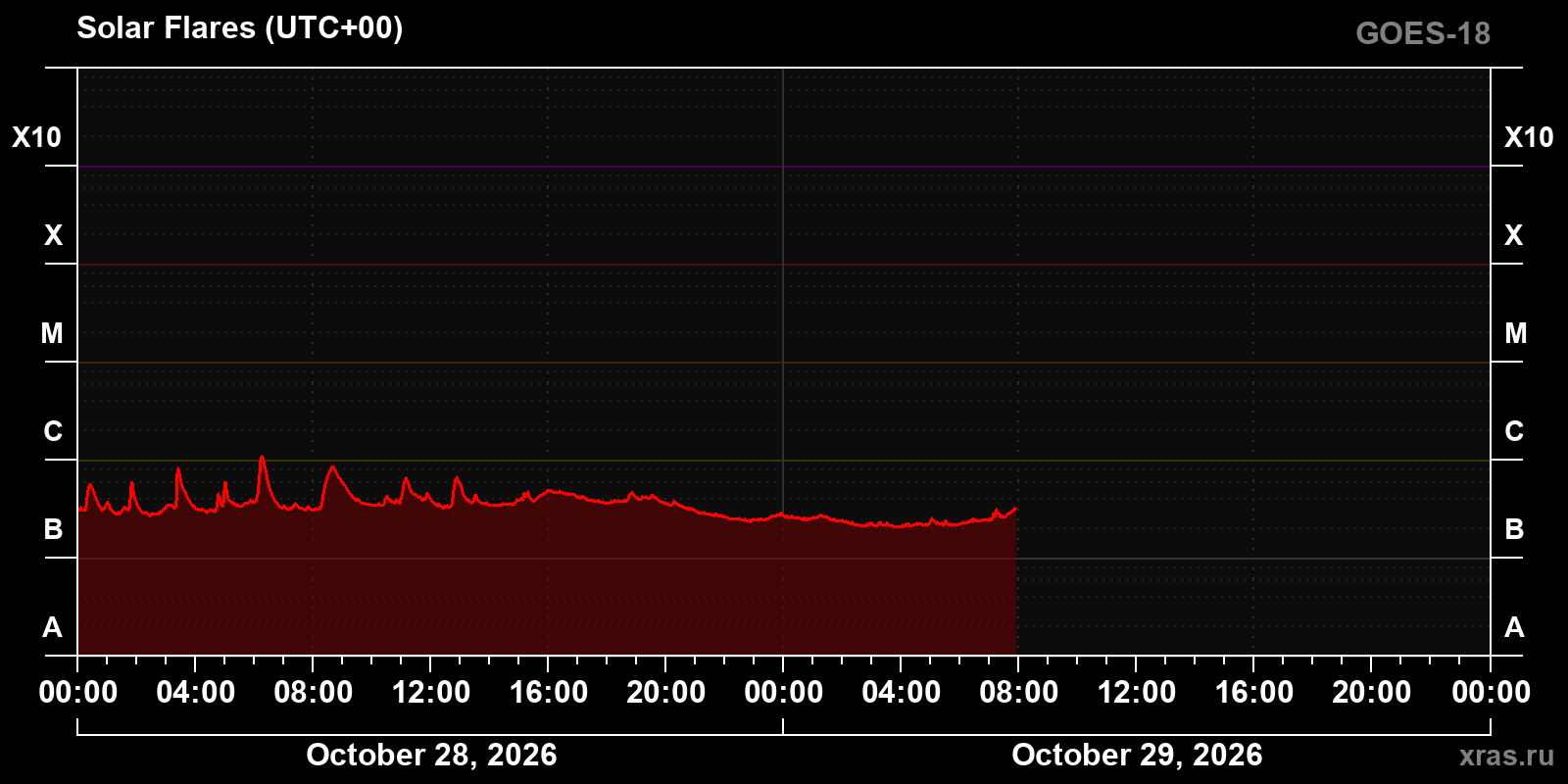
First, after a week of fluctuations, solar flare activity has finally settled on a clear direction—plummeting to the very bottom. The flare activity chart has flattened into a smooth line, devoid of any spikes. The mathematical flare index has also dropped to zero (0.0 out of 10). Looking at images of the Sun, this is hard to believe, as active regions clearly remain on the star’s surface—one area on the left limb is shining so brightly it’s almost blinding. It seems, however, that this is now merely a visual display, lacking any actual eruptive energy.
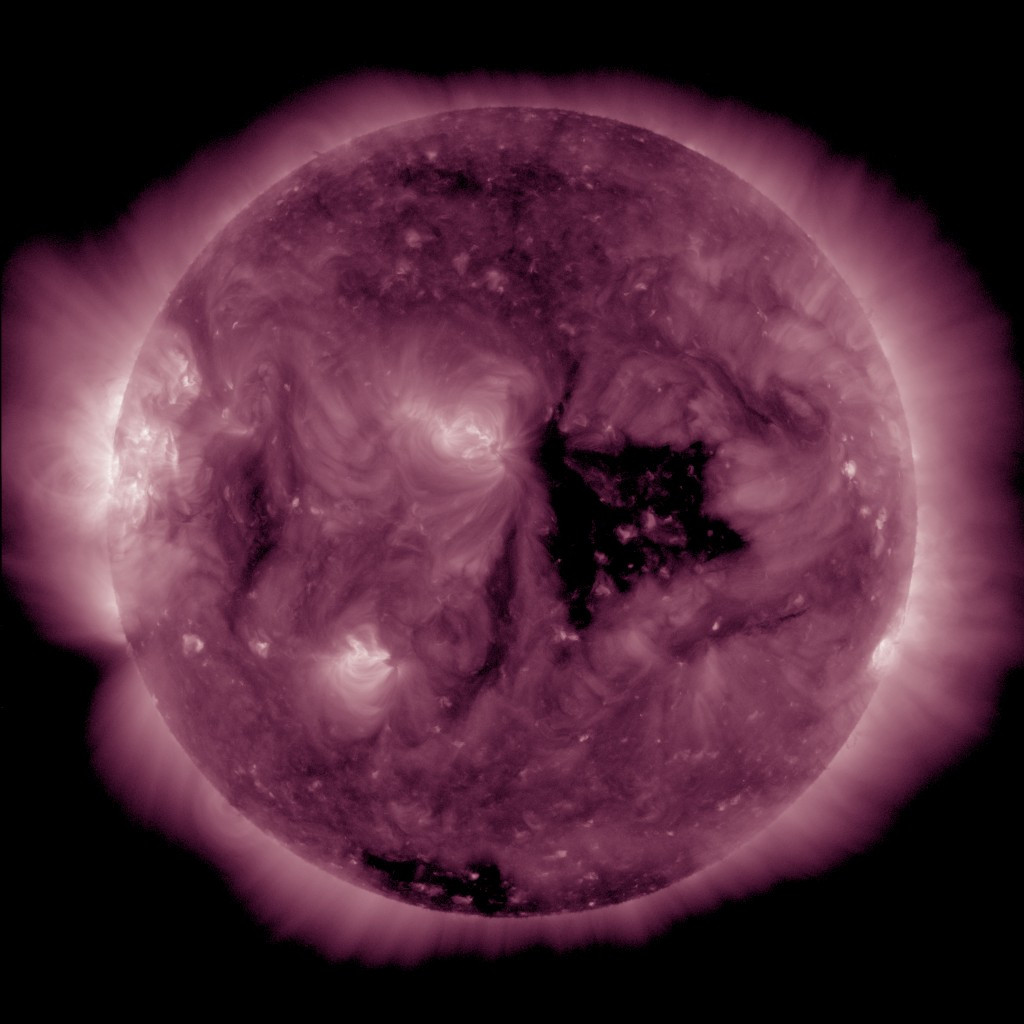
Secondly, according to current calculations, geomagnetic activity—which has been elevated over the last few days without ever reaching the "yellow" (disturbance) or "red" (storm) alert levels—is set to hit both thresholds this coming Saturday. Mathematical models confidently predict a geomagnetic storm ranging from weak to moderate (G1 to G2) on that day, which also happens to be the final day of autumn. A second coronal hole, currently rotating into a position to interact with Earth, is expected to further fuel this activity. The current forecast suggests a relatively brief storm, lasting about 12–15 hours. It is projected to begin overnight from Friday to Saturday, with the primary geomagnetic fluctuations occurring during the first half of Saturday.
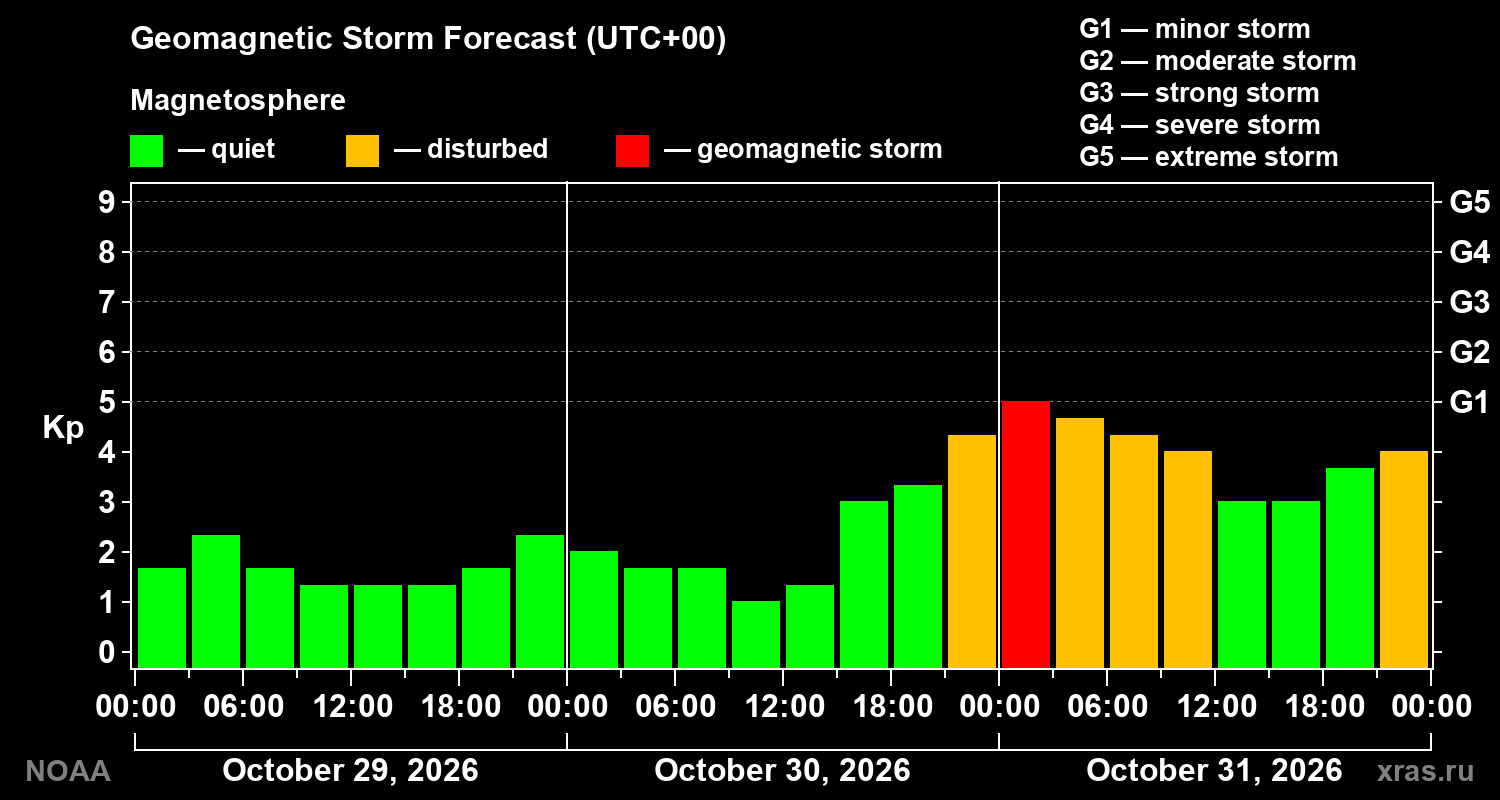
There is a potential for auroras to be visible during the initial hours of the storm—specifically, around the transition from October 30 to October 31.