
The second magnetic storm of autumn has ended.
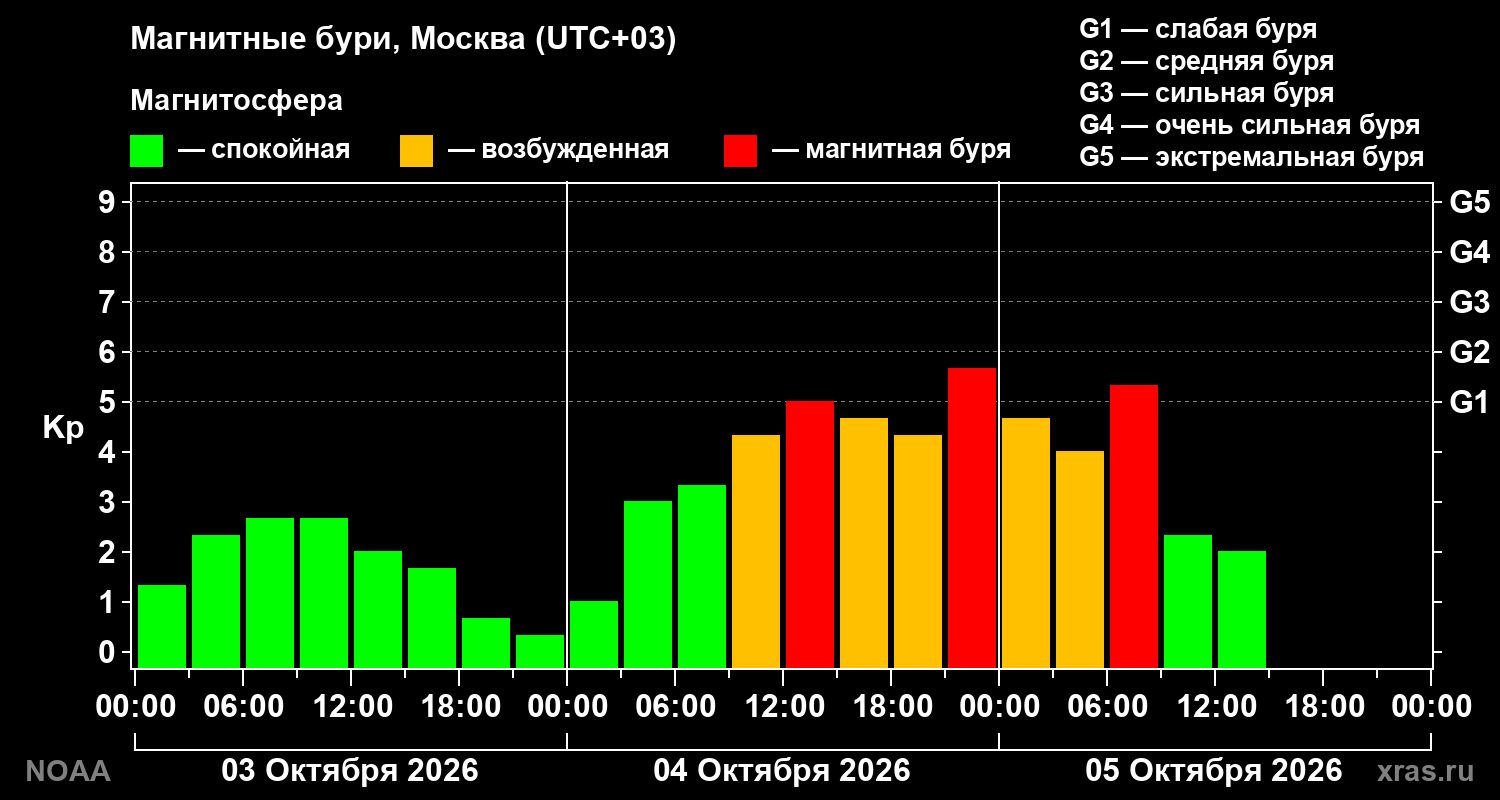
The second magnetic storm of this autumn has occurred and concluded on Earth, arriving a day later than forecast. Only one such event had previously taken place during September and October: a weak G1-level storm recorded on September 8. As predicted, the current storm was caused by the influence of a medium-sized coronal hole; while this influence persists, the peak intensity has already passed.
The storm's intensity ranged from G1 to G2—that is, from weak to moderate. The final surge was recorded today around 8:00 a.m. Moscow time. Geomagnetic conditions have since stabilized and returned to the "green zone," with a resurgence of activity considered unlikely.
Last Sunday, between 3:00 p.m. and 7:00 p.m. Moscow time, an intense burst of auroral activity was observed amidst the storm, peaking at levels 8–9 on a 10-point scale. In the European part of the country, this period largely coincided with daylight hours, so the majority of sightings were reported from eastern regions; nevertheless, some photographs were also captured in the northwest. The auroral oval has since returned to normal levels, registering 1–2 out of 10.