
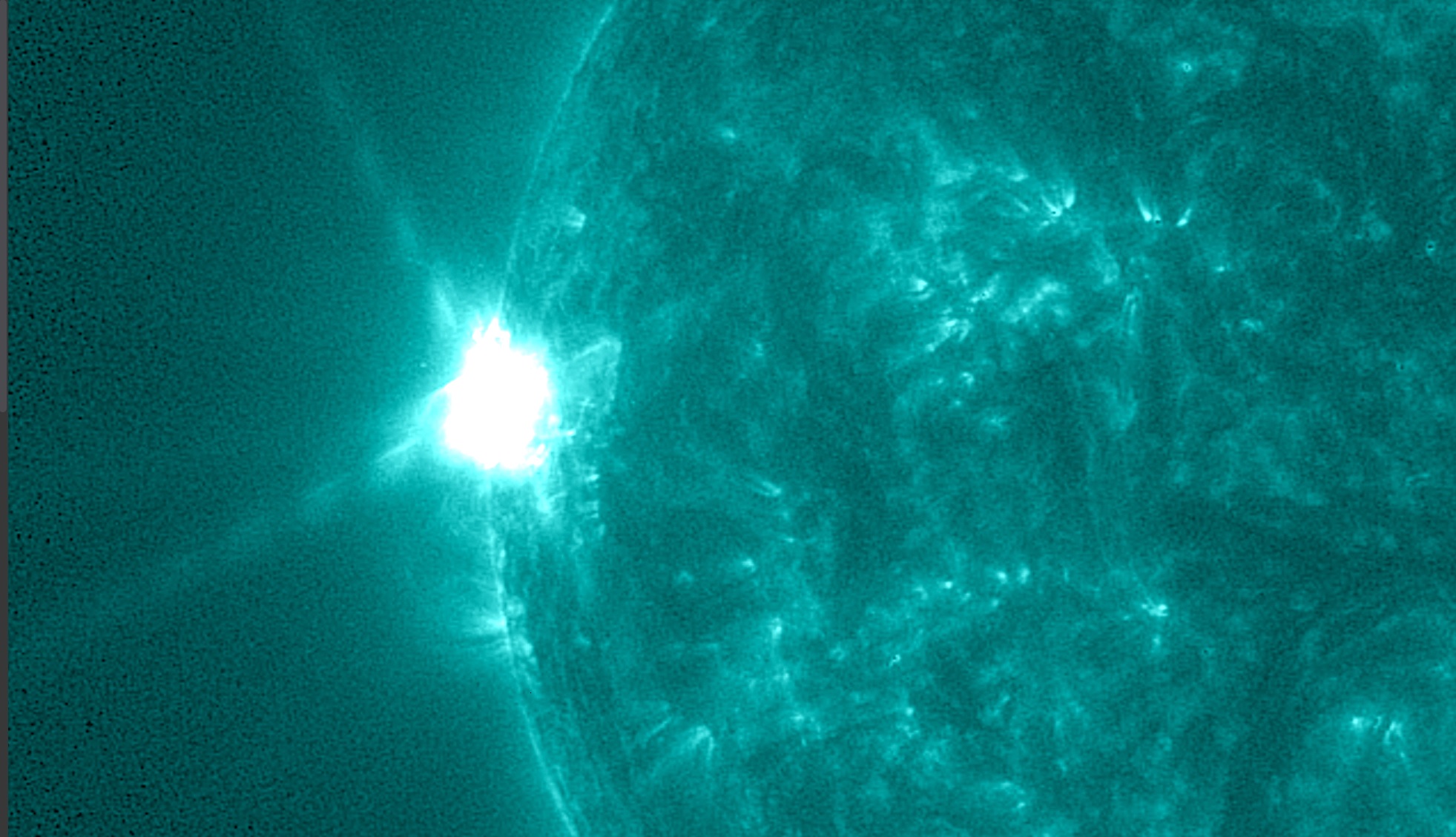
The August record didn't even last four hours; an even stronger M8.1-class flare has just been detected on the Sun. This is undeniably a major event—one that needs no qualifiers like "considering the generally quiet summer" or the like. The new explosion fell just 20% short of X-class intensity; while earlier today the author of this report would have been willing to eat his hat (which, admittedly, he doesn't own) betting that the Sun in its current state was incapable of producing an X-class flare, he certainly wouldn't take that risk now. That said, it remains unclear where the Sun is actually drawing the energy for this activity.
For Earth, this surge in activity remains a non-event—it is hard to imagine anything reaching the planet from this particular angle—but the sunspot group is only 3–4 days away from rotating into a position where it could influence Earth, and the possibility that the active region might survive that long no longer seems far-fetched. Nevertheless, there is still a sense that the fuel is about to run out. Judging by the size of the active region, it has long since burned through its allotted energy reserves and is essentially exploding on credit.