
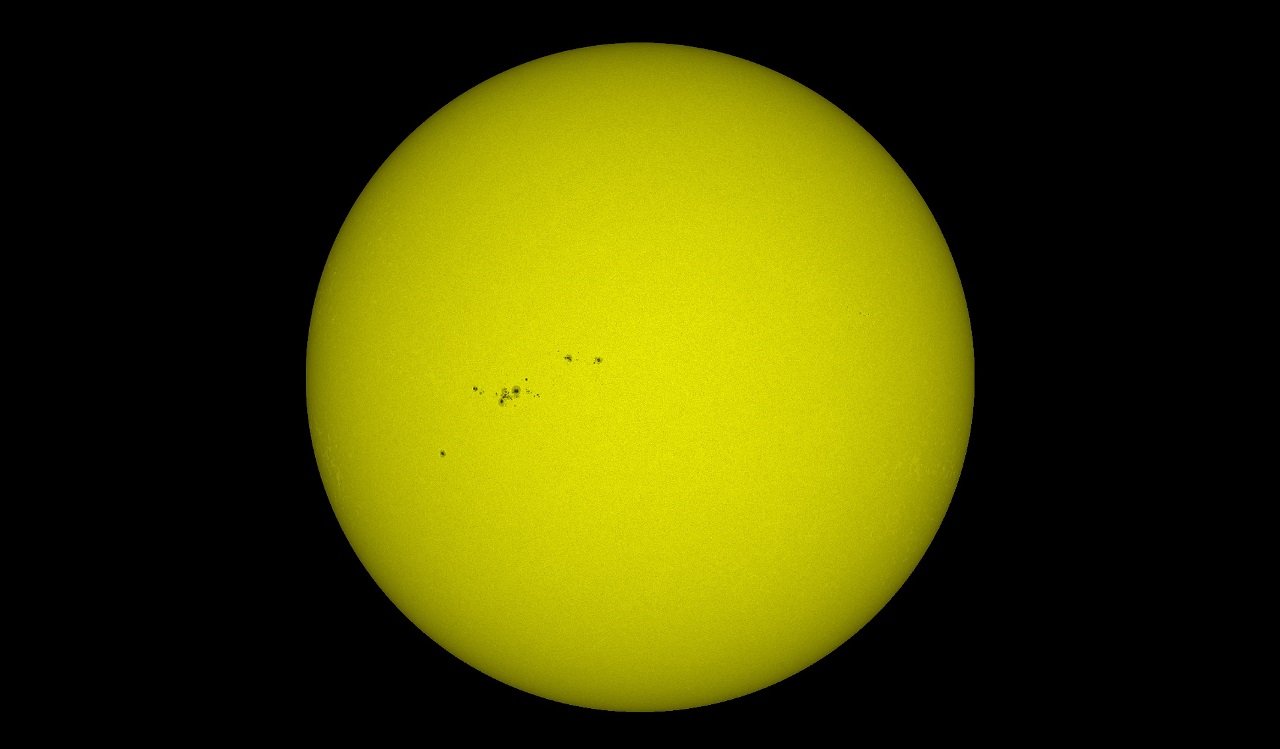
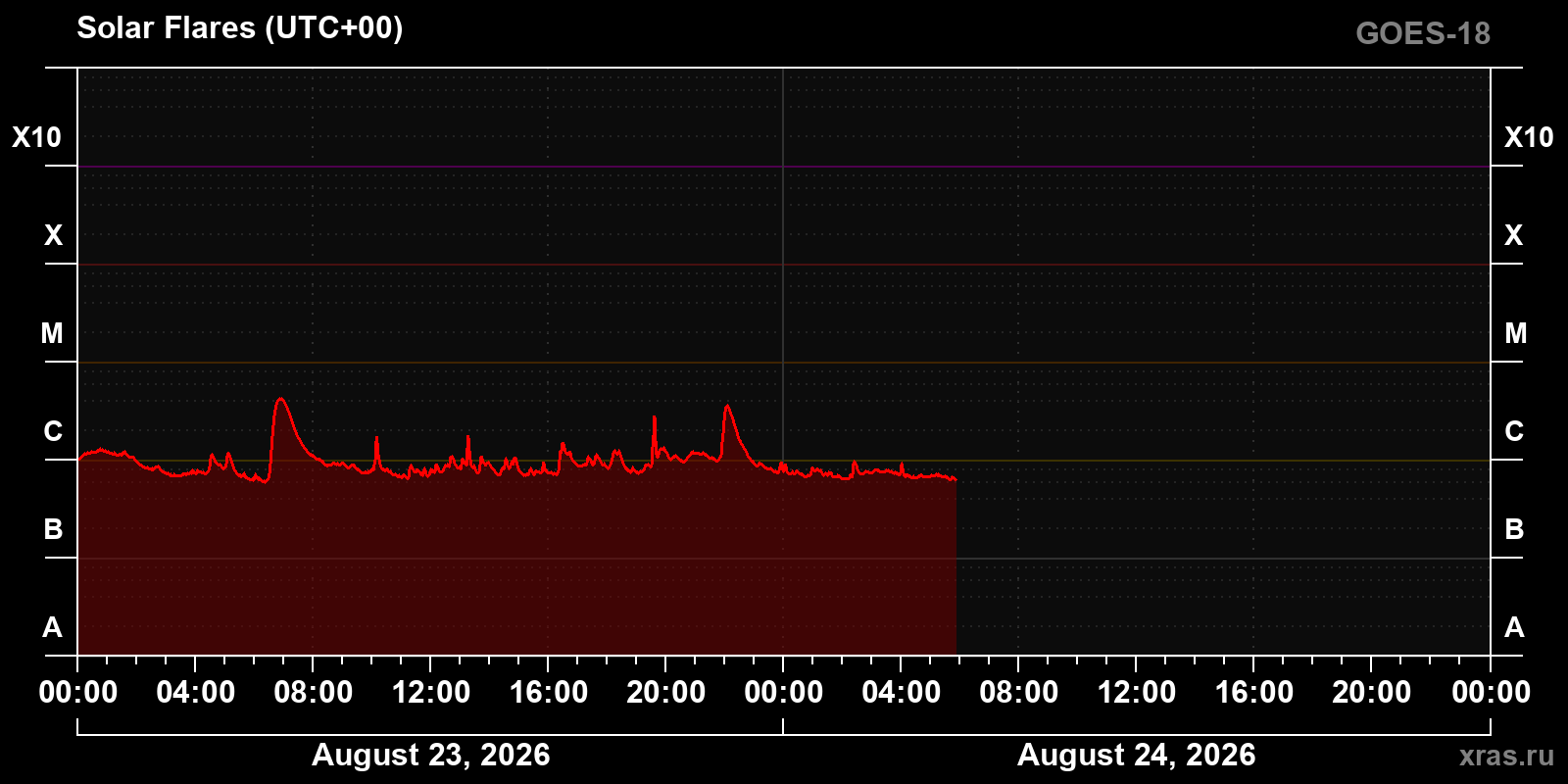
Over the past weekend, the Sun appears to have completely lost its previously significant flare potential. A total of only nine solar flares occurred on Saturday and Sunday, compared to more than thirty during the preceding two days (Thursday and Friday). Consequently, by the time large sunspot groups rotated into the center of the solar disk—the zone from which they can most effectively impact Earth—the star had run out of energy.
However, energy levels are fickle: absent one moment, present the next. For this reason, major global agencies have raised their flare risk forecasts—significantly in some cases—to 50% for strong flares and 10–15% for X-class flares. While we do not publish such specific probability figures ourselves, these numbers are hard to fully accept at face value, even though there is indeed a high number of sunspots. At the time of writing, the flare activity graph continues to trend downward.
Geomagnetic activity remains low, with a wide margin of stability. There are no factors present that could push conditions out of the "green zone." All solar wind parameters are in a "quiet" state, and no plasma ejections are heading toward Earth.
In short, magnetic storms are virtually ruled out for the next two to three days, though it is worth keeping an eye on the sunspots facing Earth at least until the middle of the week. There is objectively some activity going on there.