
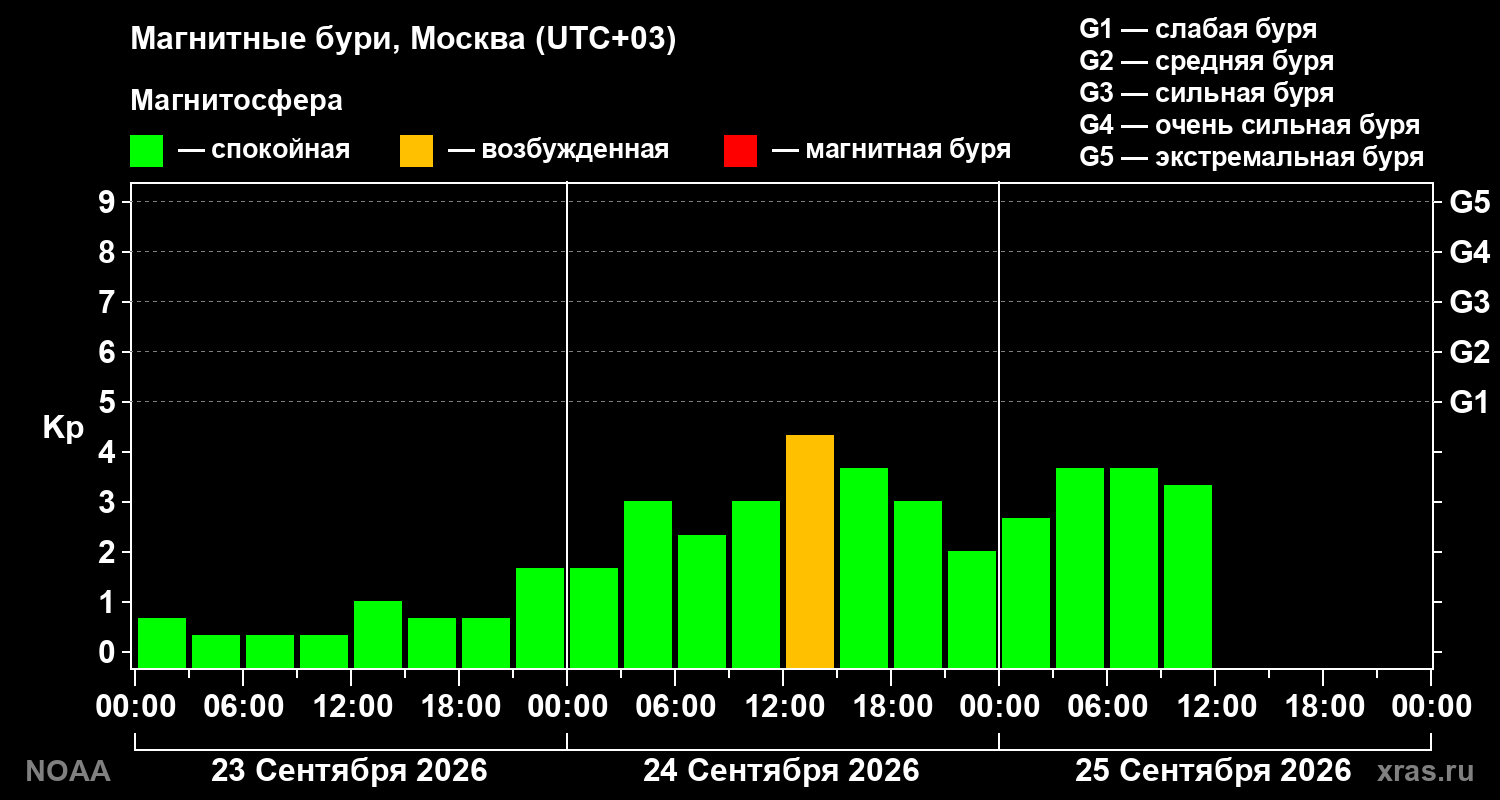
The impact of the latest coronal hole on Earth—forecast for Thursday, September 24—proved to be relatively mild. As expected, the Kp geomagnetic activity index rose from values of 0–1 to around level 3; it even briefly hit the Kp=4 threshold—indicating geomagnetic disturbance (yellow level)—yesterday midday, but it never reached the threshold for a geomagnetic storm. While the risk has not yet been entirely eliminated (mathematical models still predict a 30% probability of storms today), the peak of the geomagnetic event has clearly passed.
So far, the first month of autumn has shown unusually low geomagnetic activity. Only one geomagnetic storm—a minimal G1-level event—occurred during the first 25 days, observed on September 8. For comparison, the previous month (August) saw four days with magnetic storms, while in March of this year, seven out of 31 days were marked in red. The primary driver of these conditions is a noticeable—and as yet not fully explained—decline in solar flare activity. The Sun has been in a slump for several weeks, with no signs of a rapid recovery in sight.
As things stand, the final week of September is expected to remain entirely "green" (quiet). Any significant changes in solar activity, should they occur, are not anticipated until the coming month.