
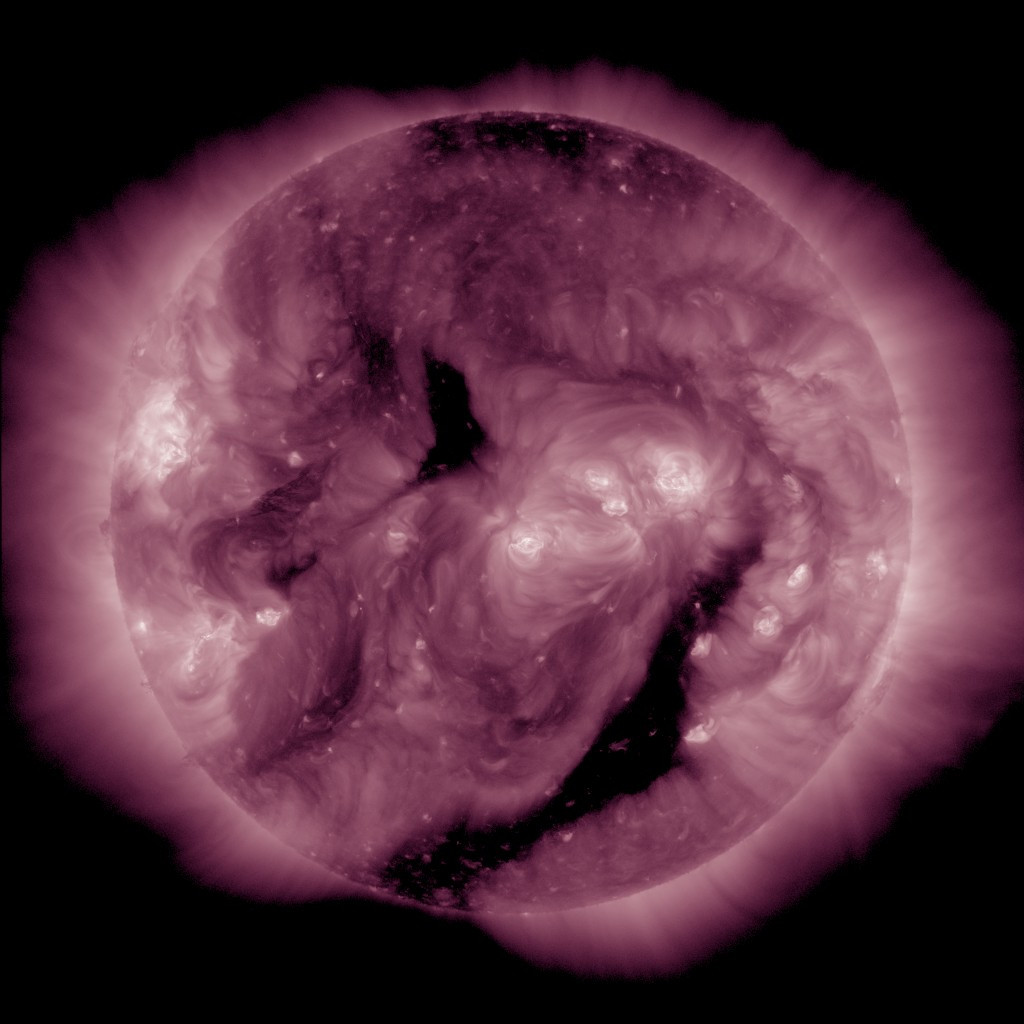
Nothing significant has occurred on the Sun over the past few days; the star remains in a quiet state.
The streak of days without flares was broken on September 19, when—after a hiatus of several days—a minor C3.3-class flare finally occurred. That quiet spell lasted six days, running from September 13 through September 18. As previously noted, this marked the longest lull in activity since 2021—the time when the star began to recover from the deep minimum of 2019–2020. While the duration itself isn't a record-breaker, the event is notable not so much for its length, but for the fact that such a significant pause occurred during a fairly active phase of the cycle, just two years after the peak in October 2024. Looking further back, however, one can find a 20-day lull between November 14 and December 3, 2021; during the 2019–2020 minimum, there were likely lulls lasting several months.
In any case, flare activity resumed on September 19 and, while remaining at a moderate level, has held steady. This poses no threat to Earth, and space weather has shown little reaction to it.
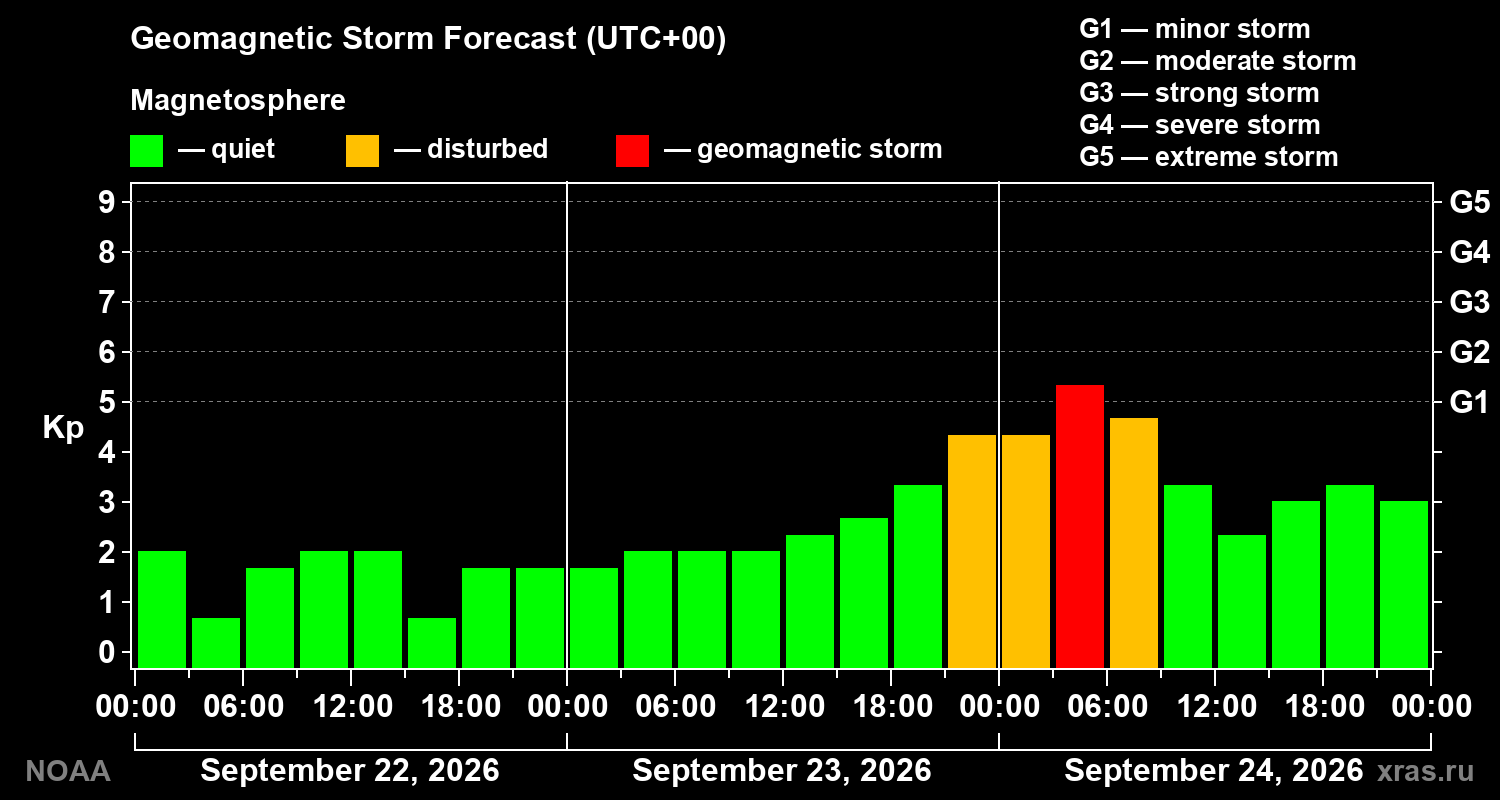
Aside from the upcoming autumn equinox—which we will cover separately—the most significant event in the coming days appears to be the second magnetic storm of the autumn, expected on September 24 (this Thursday). Its cause is visible in the attached photo of the Sun: a rather large coronal hole stretching as a dark band from the Sun's south pole toward the equator. Its equatorial edge is set to "graze" Earth the day after tomorrow. The word "hit" is in quotation marks because the hole itself will not move from the Sun; rather, a stream of fast solar wind flowing out from it is expected to sweep past the planet. Coronal holes mark regions of intense plasma outflow from the Sun—which explains their dark appearance, as the near-absence of plasma means there is nothing to emit light.
Solar flare activity will remain at its current low level over the coming days. Large prominences may break away. Overall, solar conditions and space weather are assessed as quiet.