
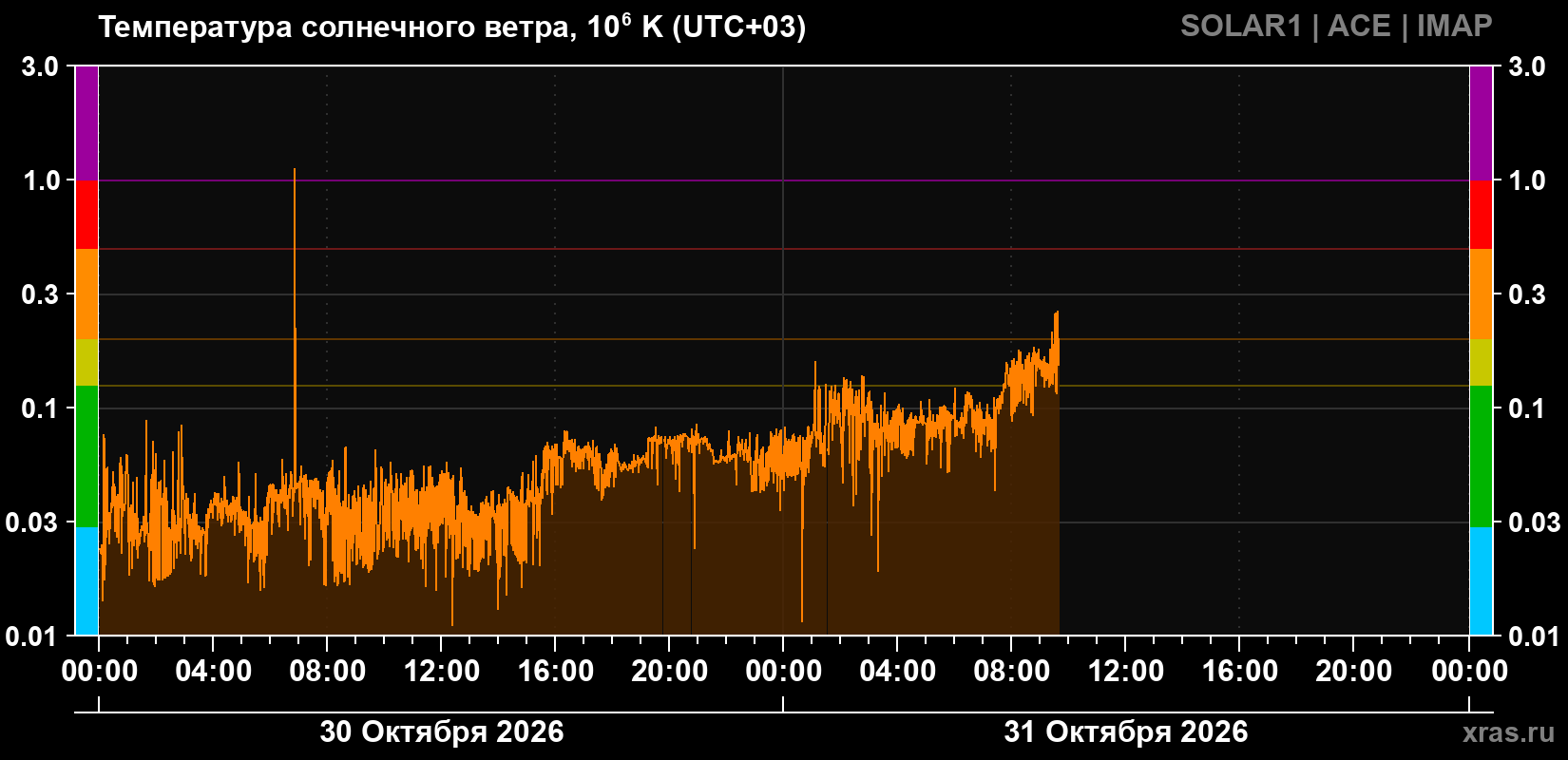
According to incoming data, the planet is currently passing through a disturbed region of space. An increase in solar wind parameters is being recorded. Plasma temperature in the vicinity of Earth has risen significantly—from approximately 30,000 to 200,000 degrees (see the second graph). An encounter with a plasma stream originating from a coronal hole was expected tonight, so this is almost certainly that event. The only slightly puzzling aspect is the modest increase in solar wind speed — typically a primary indicator of coronal hole activity—though it may still rise further. The coronal hole itself is quite large and clearly visible in imagery; therefore, it may continue to influence space weather for another 2–3 days.
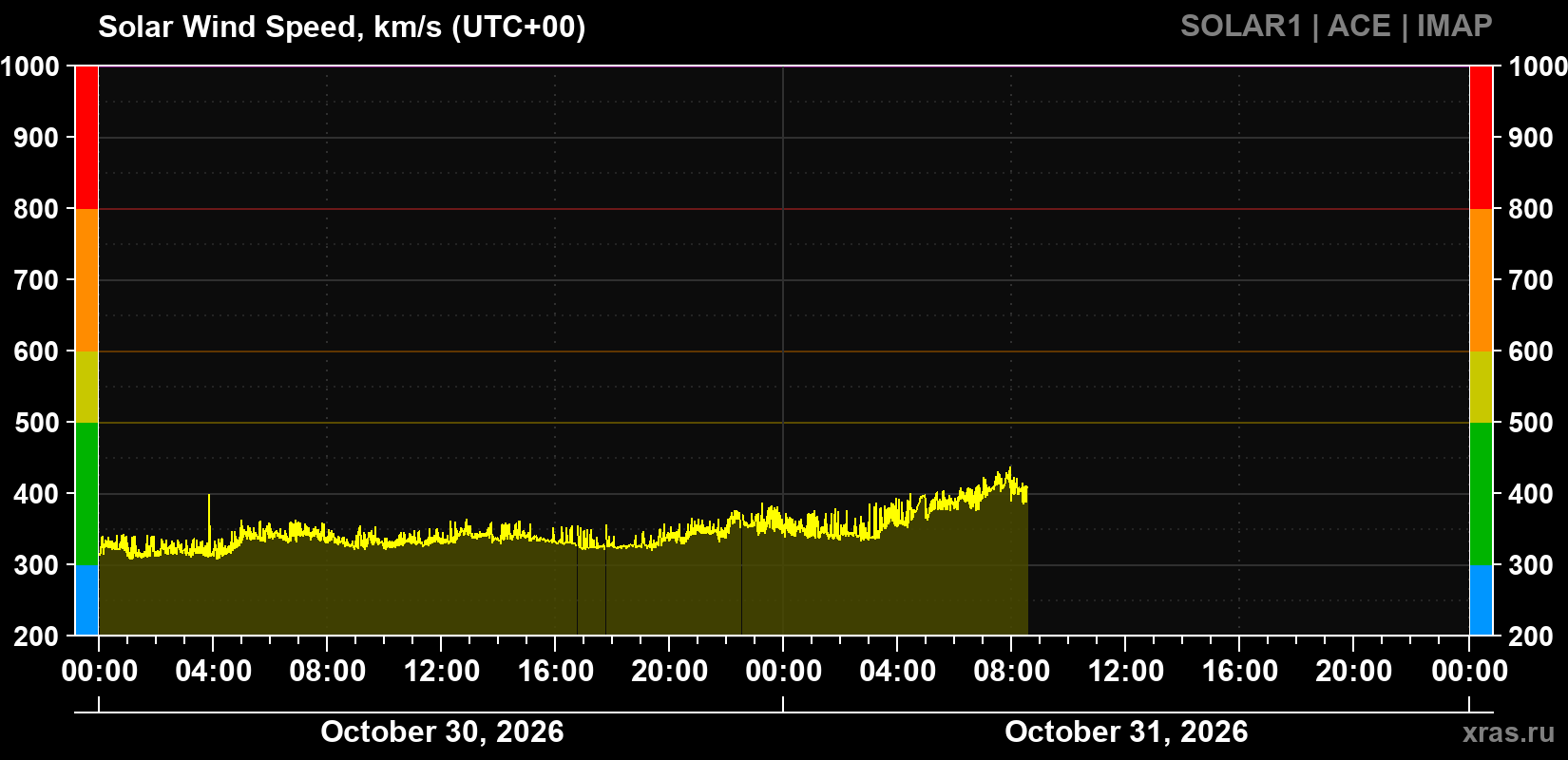
)
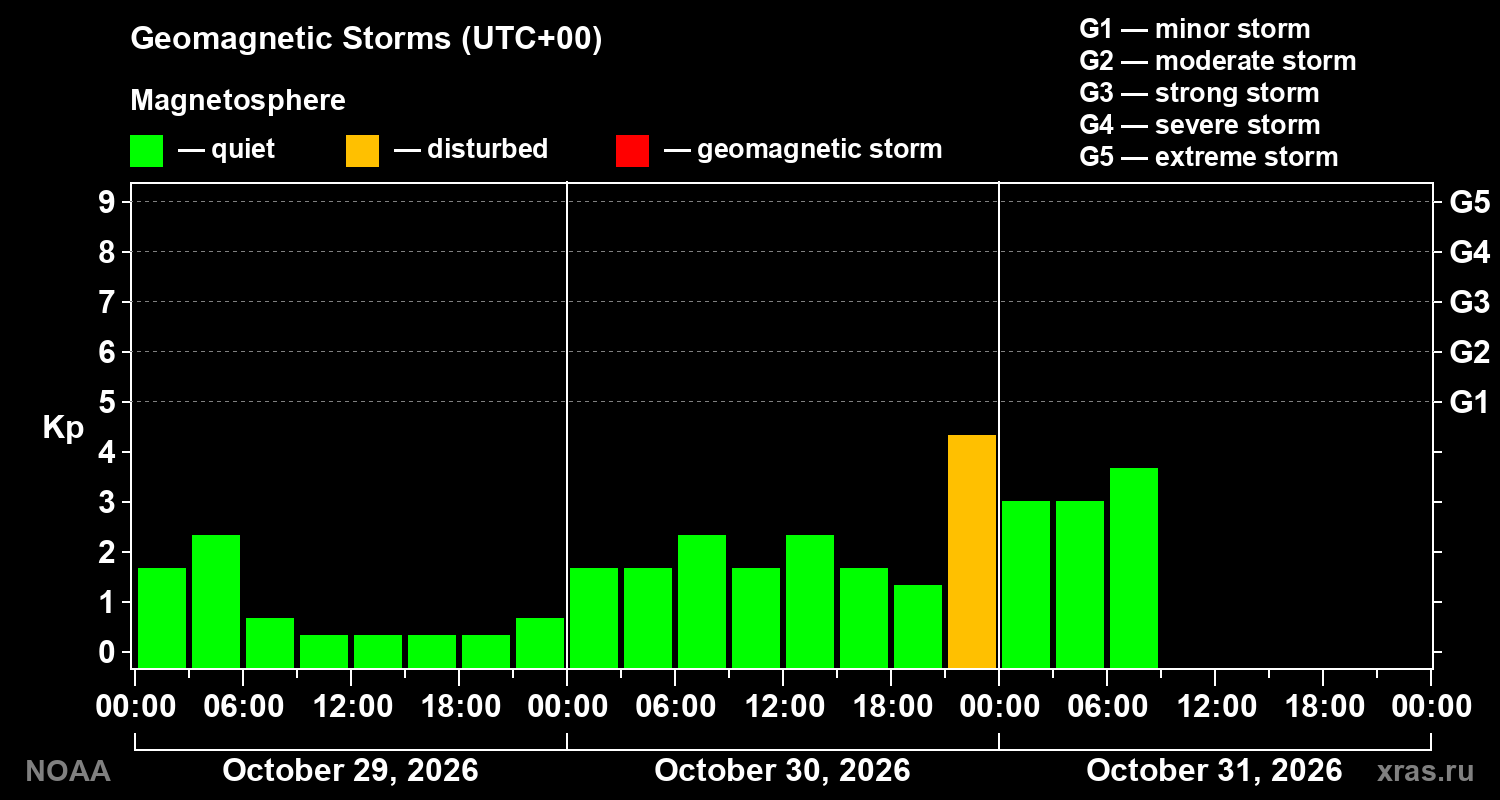
The Earth’s magnetic field has responded less strongly than anticipated. The overnight forecast called for a minor geomagnetic storm with a Kp-index of 5; however, the peak reached so far is only Kp = 4, which does not qualify as a storm. At present, geomagnetic indices are trending downward. Auroral activity also saw a slight uptick overnight, but it remained weak. The current forecast anticipates moderate geomagnetic disturbances for today and tomorrow, though no actual storms are predicted.
Solar flare activity remains at zero. Not a single flare has occurred over the last three days, and there are currently no factors present that would suggest a change in this status.