
The increase in solar activity reported yesterday has begun to yield its first results. Less than an hour ago, an M3.6-class flare was recorded on the Sun — the strongest such event since October 10, marking a gap of nearly four weeks. In absolute terms, this event is moderate, but it stands out significantly against the backdrop of an almost complete absence of flares over the past month. The eruption originated in a region relatively well-aligned with Earth (the flare is clearly visible in H-alpha line imagery as a bright spot to the left and slightly below the center of the solar disk), meaning that any ejected plasma clouds could potentially reach Earth. As of now, however, no such activity has been observed; this information may be updated later.
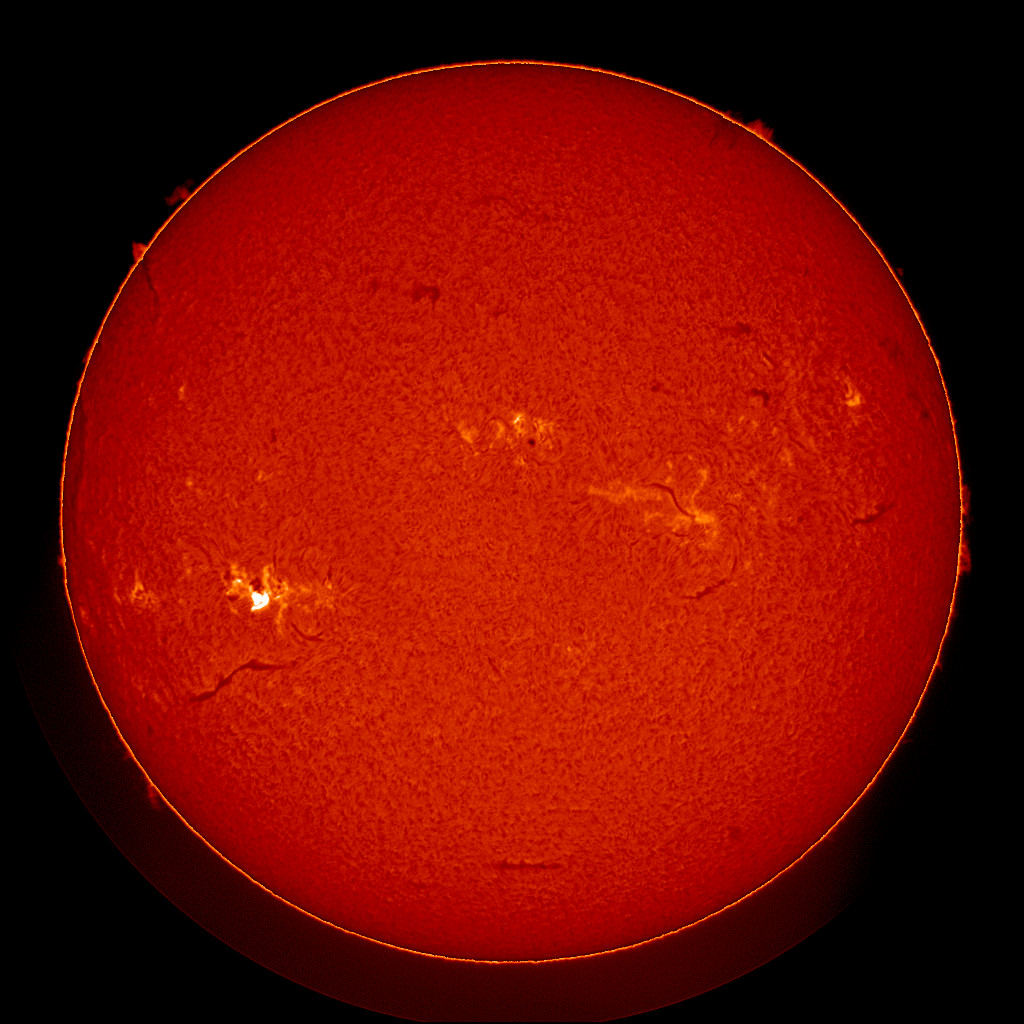
As is often the case when a powerful solar eruption occurs after a long lull, the question arises: is this an isolated event, or the beginning of a series? We shall see, but at first glance, while the Sun currently possesses enough energy for individual eruptions, it does not appear to have the capacity for a sustained series of flares.
For the record, the event occurred at 18:33 UTC. It originated from sunspot group 4566. Although the group covers a relatively small area— about 300 units (for comparison, the largest groups in history have reached 2,000–3,000 units) — it is classified under the highest complexity category (Beta-Gamma-Delta), so further surprises are certainly possible. If this is indeed the start of a series, it should become apparent within the next few hours.