
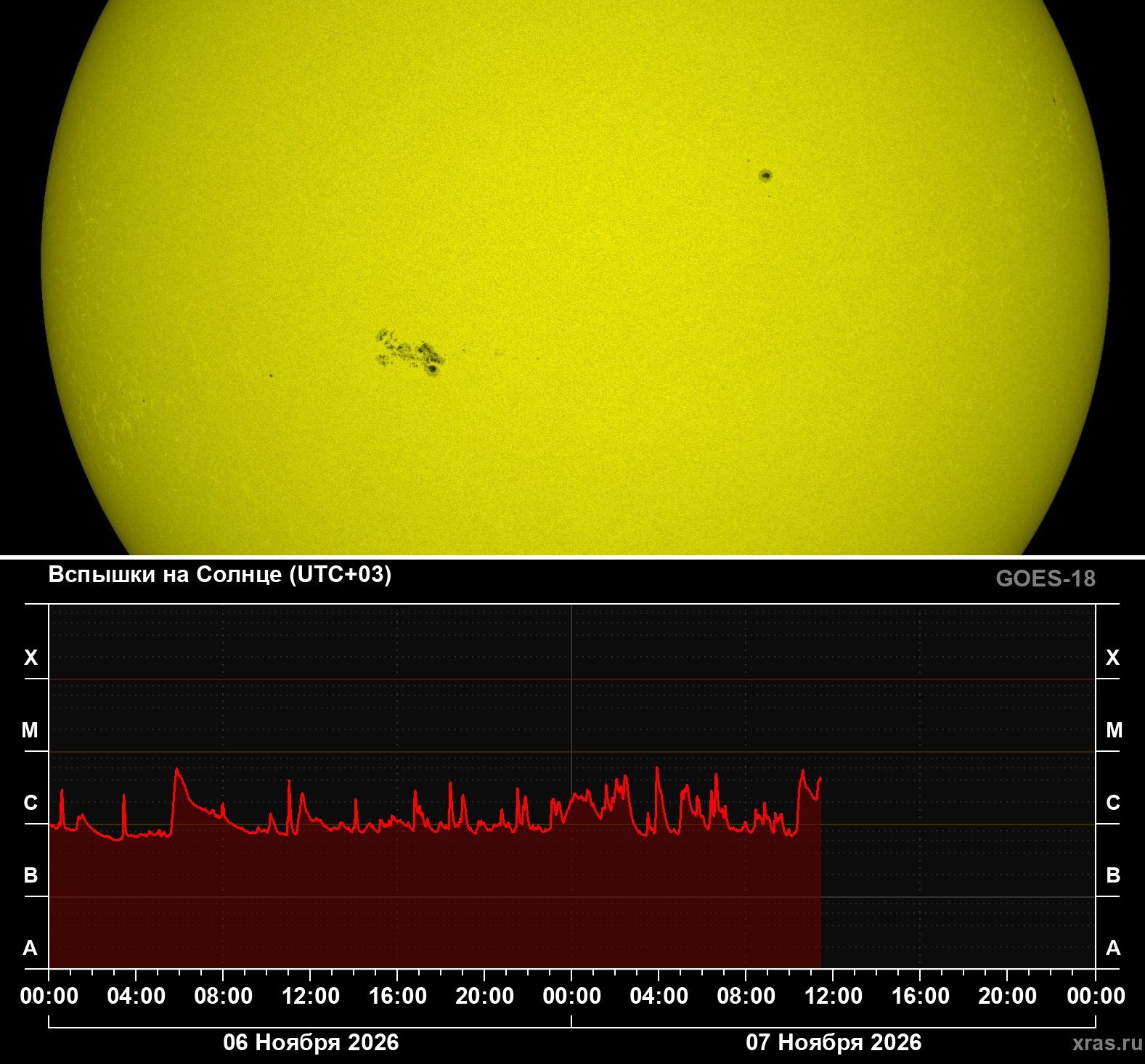
Solar flare activity is surging rapidly. Over the past 24 hours, space-based monitoring instruments have recorded 18 flares of class C or higher — events ranging from ordinary to large. In the first 12 hours of today alone, another 17 events have been logged. This brings the total count over the last two days (or less) to 35, and it is highly likely that the figure will reach 40 or even 50 by the end of the day.
A gradual increase in solar flare activity began mid-week. On Monday and Tuesday, there were no flares at all. Wednesday and Thursday saw three events each, including a significant M3.6-class flare — the strongest recorded since early October. While it initially appeared that this moderate trend would continue, the number of flares spiked to 18 on Friday, and that figure is almost certain to be surpassed today.
The primary source of this activity is a large sunspot group currently positioned near the center of the visible solar disk. It appears that substantial energy is being released from the Sun’s interior into its atmosphere, where it is being rapidly consumed through a continuous series of moderate-intensity explosions. From the perspective of potential threats to Earth, this pattern is actually favorable; the alternative would be the accumulation of energy, which could lead to infrequent but much more powerful flares—a concerning scenario, given that the sunspot group is located almost directly facing Earth. However, if the rate of energy influx exceeds what the active region can "process," energy may already be accumulating. In that case, amidst the frequent, moderate-scale events, larger, more intense flares could begin to emerge as early as this afternoon. In terms of historical records, the maximum number of solar flares recorded in a single day is around 25–30. For instance, a very high number — 29 flares — occurred on December 10, 2024; this appears to have been a record for the current solar cycle. More recently, a significant number of events — 19 in total — was observed on August 19, 2026, nearly three months ago.
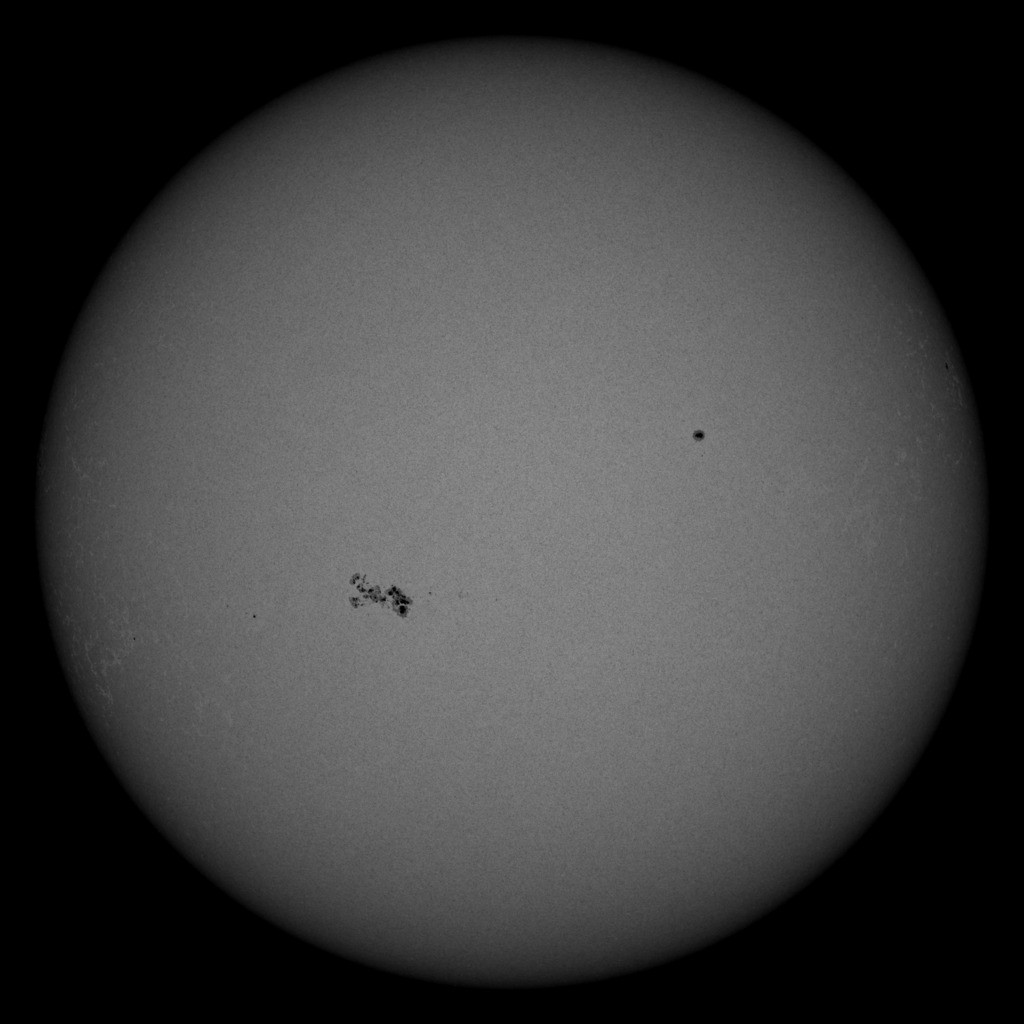
It should be noted that this increase in activity is taking place against the backdrop of a disturbed Earth magnetosphere, which entered the influence zone of a large coronal hole last night. Although geomagnetic storms have not yet begun, the magnetosphere is clearly in an unstable state. If this is compounded by the impact of powerful solar flares, the reaction of the magnetic field could be particularly intense— potentially leading to geomagnetic storms of the highest magnitude.