
Solar Activity
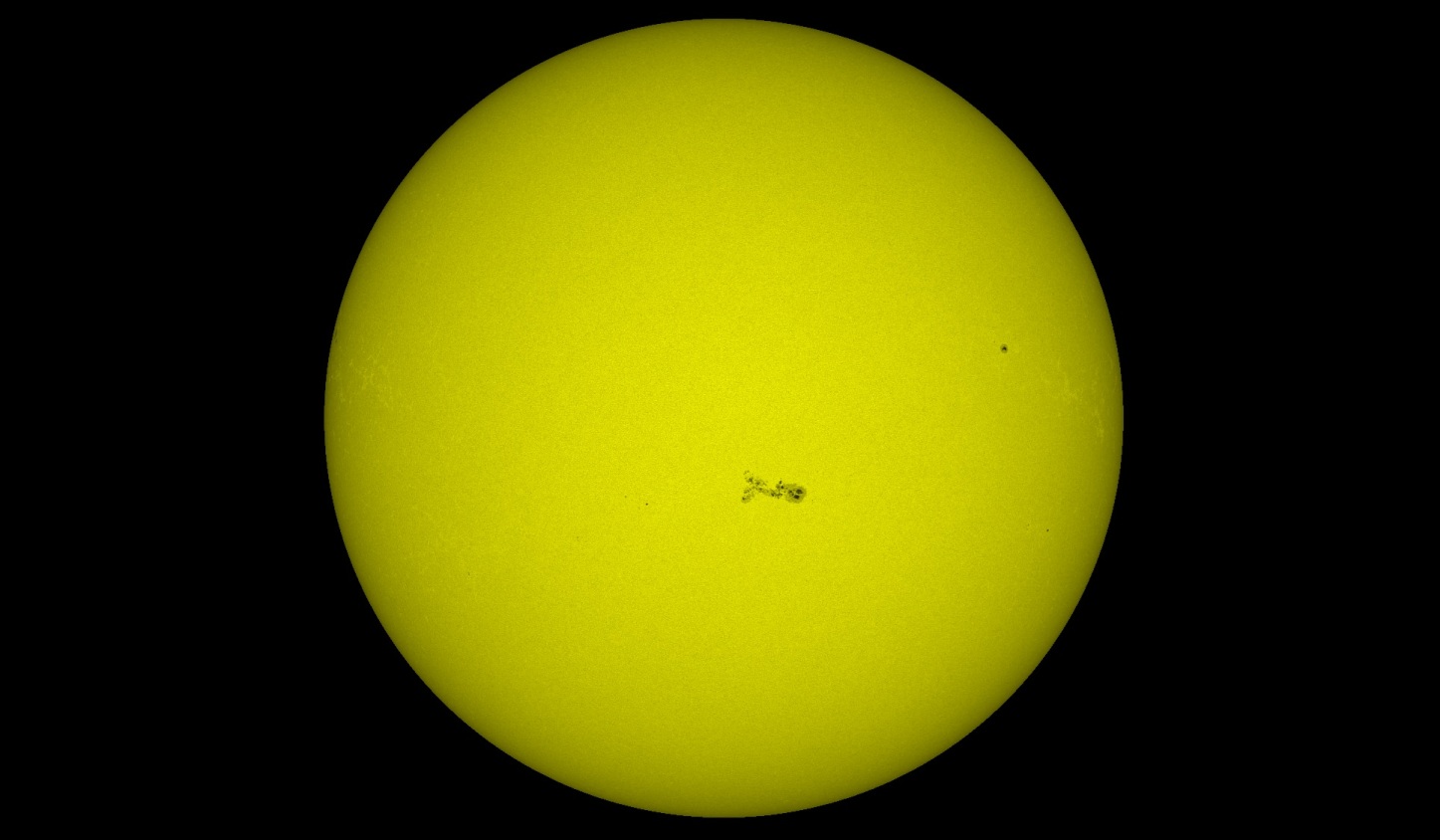
A high-frequency barrage of moderate-intensity solar flares continues. On Sunday, 28 flares were recorded over the course of the day, following 29 flares on Saturday — a figure that, as previously reported, matched a 21st-century record. Today, 10 flares have already occurred within the first 8 hours, maintaining a pace of approximately 30 events per day. All these flares originate from a single active region, 4566, which has moved to the center of the visible solar disk — placing it in direct alignment with Earth. Paradoxically, if this rapid succession of smaller explosions continues, it could actually be a favorable outcome, as the solar energy is effectively being dissipated rather than stored. It would be more concerning if the region shifted toward accumulating energy for larger, more powerful flares. Overall, it appears that the current rate of activity is insufficient to fully discharge all the stored energy; notably, in addition to standard C-class flares, a consistent series of M-class flares has been occurring for the second day in a row. If this trend persists, it is theoretically possible that an X-class flare—the most intense category—could occur today. Given that the source of these eruptions is currently positioned directly facing Earth, such an event could be problematic.
Geomagnetic Activity
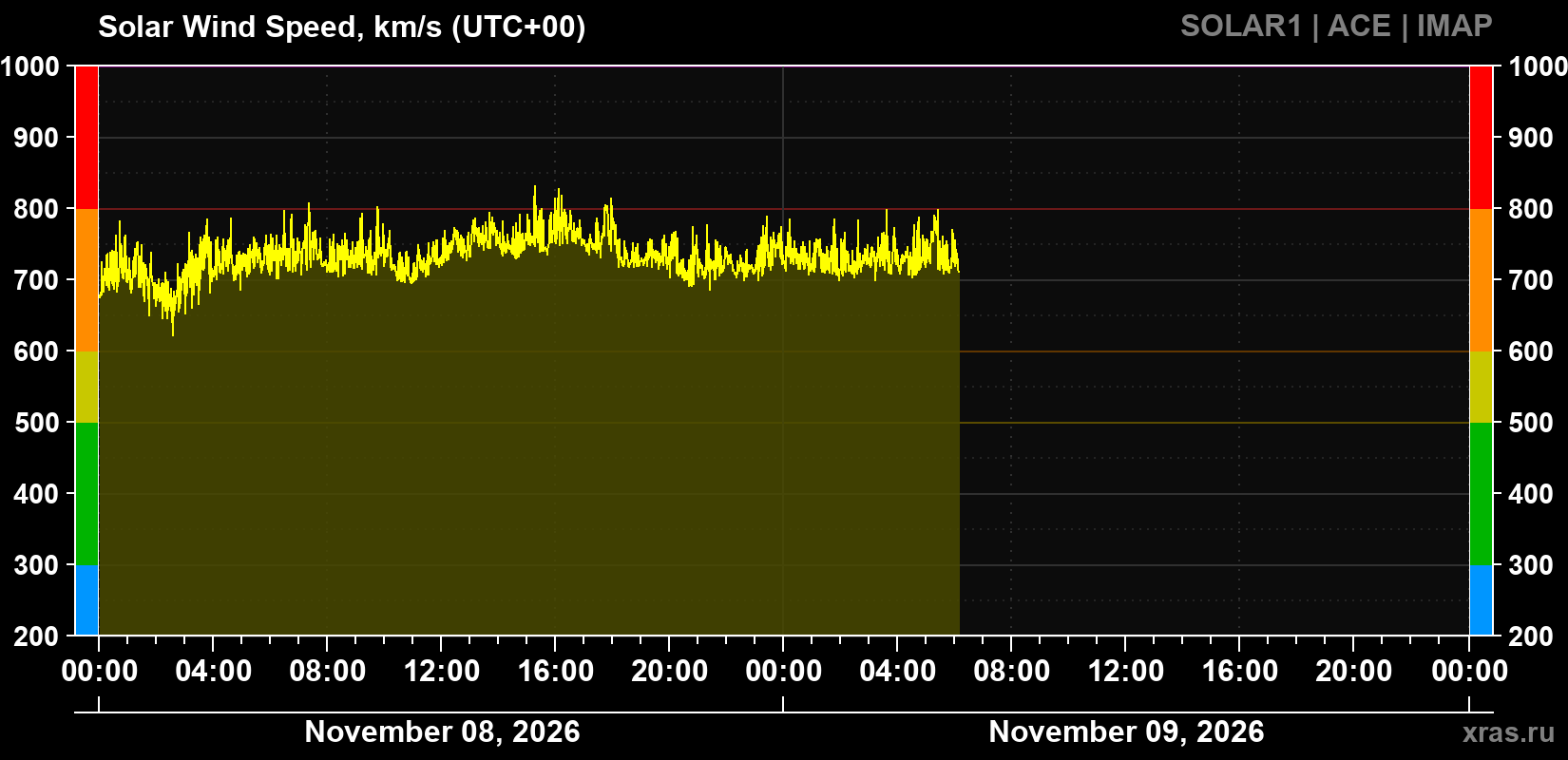
Earth remains within the influence of a large coronal hole on the Sun. Solar wind speeds are exceptionally high — reaching 700–800 km/s, which is two to three times the norm. So far, Earth has responded with sporadic, weak-to-moderate geomagnetic storms. For the most part, however, while geomagnetic indices remain elevated, they have stayed within the "green" (stable) range. Forecasts suggest that the solar wind parameters in Earth's vicinity, currently disturbed by the coronal hole, will begin to stabilize starting today. Residual geomagnetic disturbances are possible over the next 24–48 hours, but no major storms are expected from this source. As noted above, solar flare activity is now more likely to be the primary source of potential trouble for Earth. The coronal hole is clearly fading and will not cause any issues.
Brief Conclusion
Minor geomagnetic disturbances—a lingering effect of the coronal hole—are possible over the next two days. The main risk factor for the coming days is the potential onset of major solar flares. Should these occur, the geomagnetic forecast for the middle and latter part of the week would deteriorate significantly.