
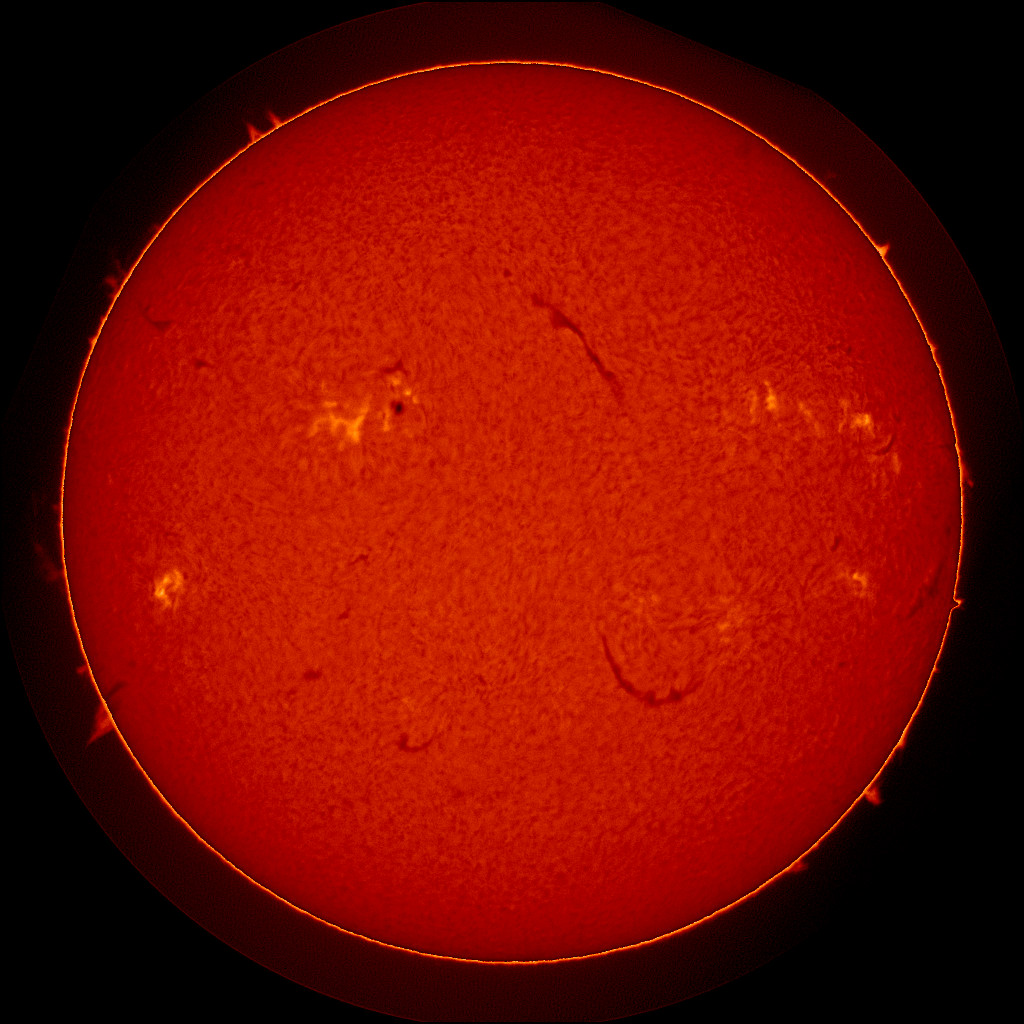
Solar Activity
The frequency and intensity of solar flares are once again on the decline. The unexpected surge observed over the last two days appears to have exhausted all available energy reserves; now, lacking further "fuel," the activity is gradually subsiding. The primary highlights included two M-class flares (technically "strong," though they hovered near the threshold of the weaker C-class) and approximately 40 C-class flares. Despite the Sun’s best efforts, this was not enough to significantly impact Earth. Several small plasma clouds were ejected into space, but all of them missed our planet. At present, solar activity is clearly trending downward. It remains to be seen whether the Sun can tap into new energy reserves.
Geomagnetic Activity
The main event was a minor geomagnetic storm — the second in November and the sixth this autumn. This event lacked a clear, singular cause; rather, it resulted from the cumulative strain on Earth’s magnetic field after two days of exposure to a disturbed solar wind originating from a coronal hole. Geomagnetic indices have since returned to the "green" (stable) zone. More details can be found here.
Brief Conclusion
The recent localized spike in solar activity appears to be coming to an end. Despite producing nearly 50 flares, the activity failed to have any notable impact on Earth. Moving forward, the Sun must either find new energy reserves, or activity will likely return to a baseline low. A minor geomagnetic storm was also recorded earlier today—the sixth such event this autumn. Overall, the number is quite low, making this a relatively quiet autumn so far. That said, the season is not over yet.