
With the object 3I/ATLAS approaching its closest approach to Earth in just a week, reports are emerging of new opportunities for observing it with simple optical instruments or even the naked eye. In this regard, I'd like to point out several errors in these statements.
First of all, the date itself—December 19—is designated as the day of closest approach more mathematically than objectively. As of this morning, the object is 271 million km from Earth. This means that before closest approach, which will indeed occur in seven days at a distance of 269 million km, it remains to reduce its distance from Earth by only 3 million km, or approximately 1%. Therefore, in a sense, the object is already almost at its closest approach to the planet. And if at this moment, when you look up at the starry sky (which, admittedly, you'll have to try hard to see through the clouds), you don't see a huge comet above you, it's hard to expect anything to change in the coming week. The difference between December 18th and 19th, or December 19th and 20th, will be only 100,000 km. In this sense, the celestial body will hover at a constant distance from Earth for 2-3 days during its closest approach, before rapidly moving away toward its expected rendezvous with Jupiter next spring.
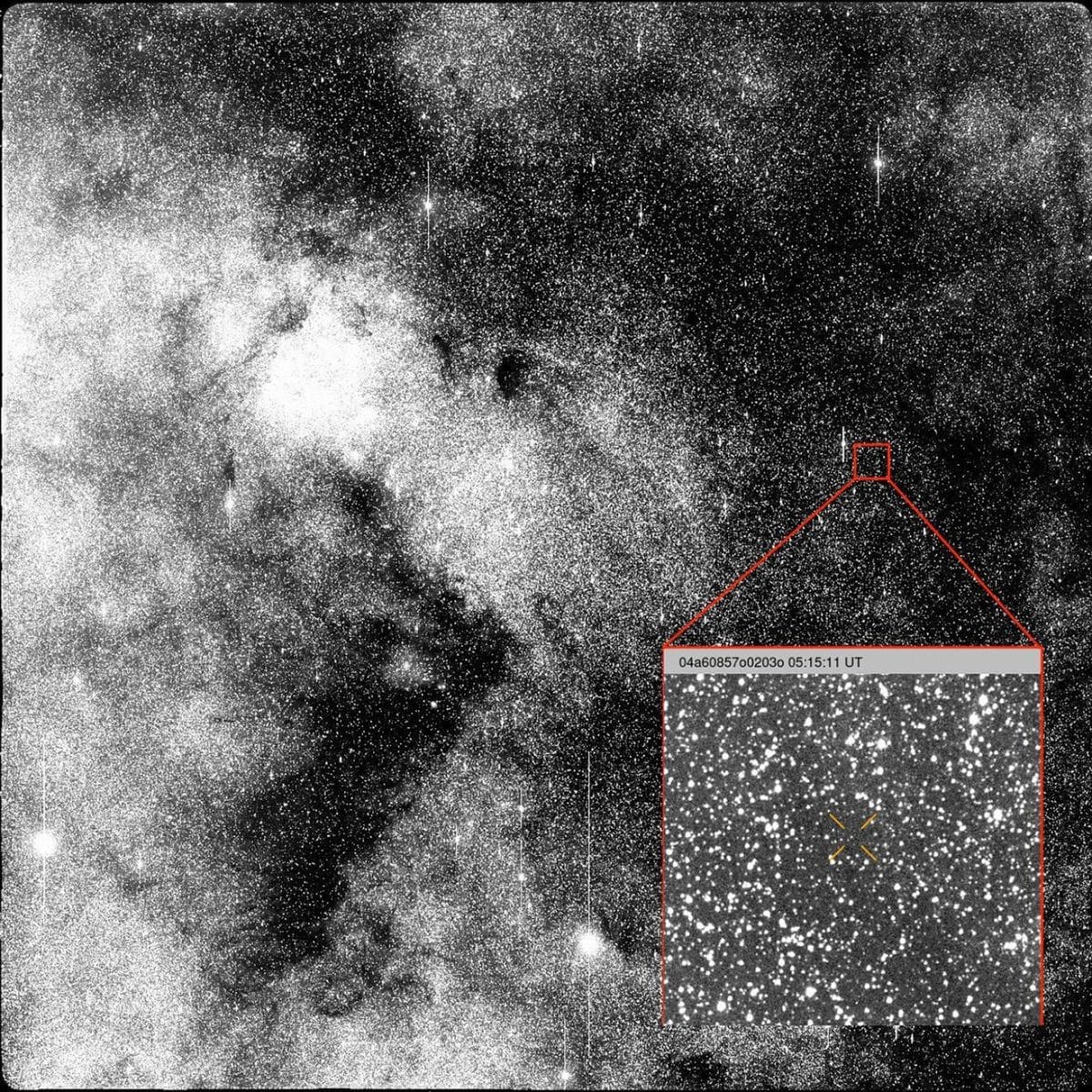
The main obstacle, however, is that the celestial body is exceptionally faint. This makes it difficult to observe even with semi-professional instruments, let alone simpler instruments like binoculars or a telescope once given to a child that's been gathering dust in a closet ever since. Currently, 3I/ATLAS's magnitude is around 11th-12th. This means that observing even the comet's nucleus (a faint, slightly fuzzy "star") will require telescopes with an aperture of at least 120 mm and some experience using them. The photographs of the comet's tail, currently being posted on social media by some astrophotographers, require a titanic effort to obtain and combine hundreds of images into a single image, followed by laborious software processing. This processing is so extensive that in some cases the authenticity of the results is questionable. However, to see just how difficult it is to photograph the tail, one only needs to look at the new 3I/ATLAS images recently released by the Hubble Space Telescope. Their very appearance makes one wonder whether there's any chance of seeing the celestial body in detail with a pair of binoculars found in the attic, let alone with the naked eye.
Nevertheless, finding the approximate location of the comet in the sky is quite easy. If you have clear skies and are in the mood for a night walk, you can go on the night of December 12th-13th, around moonrise (around 1-2 AM local time). 3I/ATLAS will be located approximately 10-15 degrees above and to the right of the lunar disk. You won't be able to see it, of course, but you'll at least be able to wave to this interstellar visitor.