
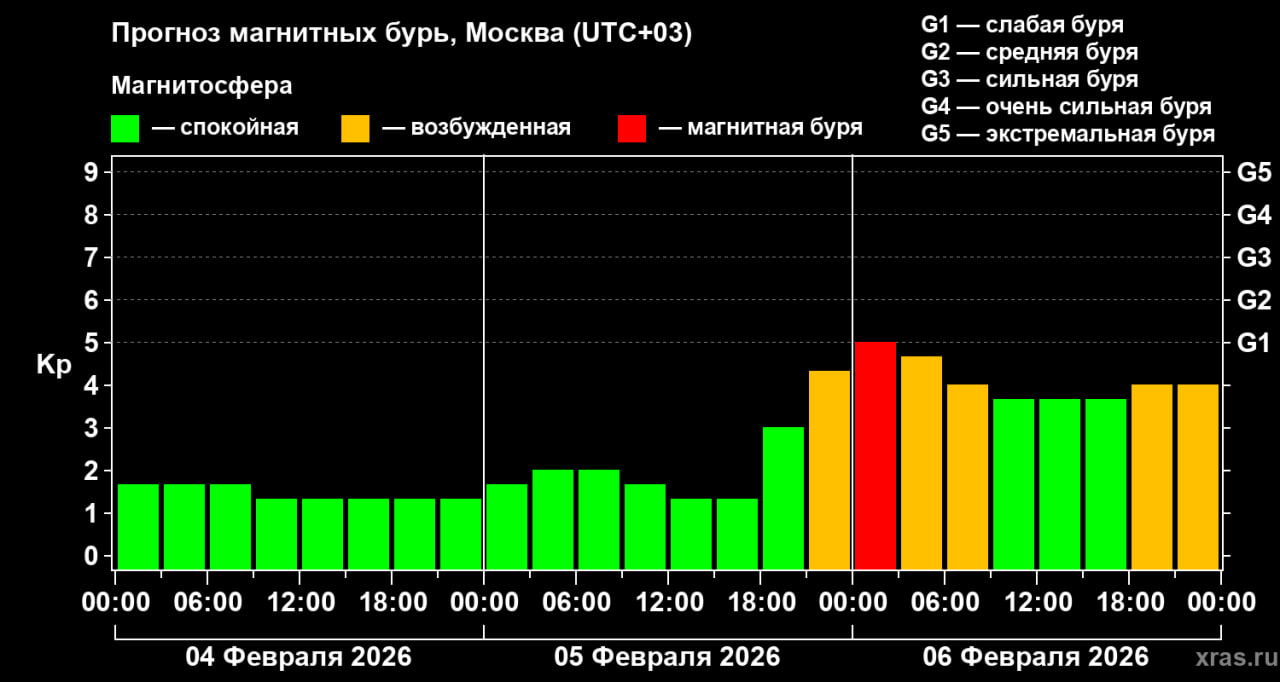
The first disturbances from the solar activity surge that began several days ago should begin reaching Earth tomorrow. Despite the exceptionally high level of active processes (in the first three days of February alone, five X-class solar flares and approximately 50 M-class solar flares were recorded), magnetic storms are still expected to be weak. This is because the solar activity centers only entered the Earth's zone of influence yesterday, and the planet is expected to be affected only by the edges of the plasma ejections that left the Sun during the previous period. The bulk of these ejections will pass by the planet.
Yesterday, the first X-class solar flare occurred in the geoeffective zone, but it was not accompanied by plasma ejections. Therefore, the first of four days during which the active centers should be in the zone of direct influence on the planet did not pose a threat. Active region 4366 continues to grow and yesterday crossed an important psychological barrier—its area exceeded 1000 m.d.p. units (millionths of a hemisphere). In the current cycle, only five sunspot groups have managed to do this so far. Leading the way is group 3664, which in May 2024 produced the only magnetic storm of the highest, level 5, in the last 20 years.
Sunspot group 4366 will remain in the zone of maximum risk for Earth for approximately three more days.