
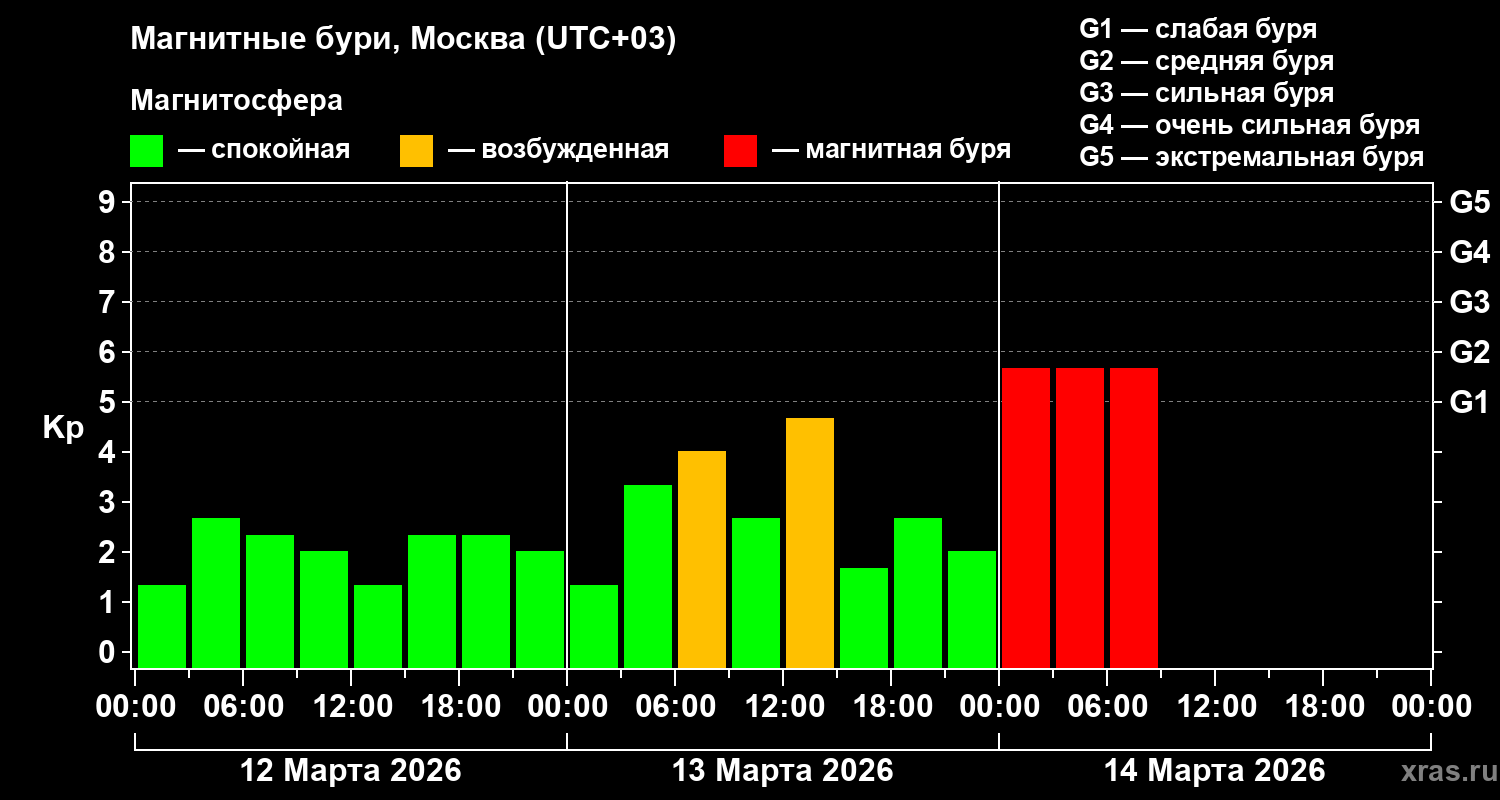
A planetary magnetic storm has been recorded since approximately midnight Moscow time. This event is associated with a sharp increase in solar wind speed near Earth, which, in turn, is caused by a coronal hole on the Sun. The storm is unusually stable—for the entire nine hours it has been ongoing, the index has remained at the same level of G1.7, corresponding to an average event.
The solar wind speed is currently at approximately 700 km/s, compared to the usual 300–400 km/s, meaning it has doubled and shows no signs of abating. Therefore, geomagnetic disturbances will continue (they were initially forecast for 2–3 days), although there are currently signs of a break. A temporary stabilization of the situation is possible in the coming hours.
Storms of this magnitude can affect power systems and radio wave propagation at high latitudes. In the central and southern parts of the country, the impact is weak.
This is the second magnetic storm in March, but the first significant one. The previous one occurred on the 4th and was rather pathetic—a brief episode that was thought to be unrelated to any external factors. In 2026 alone, 17 days with magnetic storms have already been recorded (23%). Last year, which was noted as the most geomagnetically active in a decade, such events accounted for 19%. In other words, the year is on track for record-breaking results so far.
Amid the storm, intense auroras of intensity 8–9 on a scale of 10 were observed from 3:00 to 7:00 AM Moscow time, but the center of the auroral oval was already located in Europe and Canada by this time. Theoretically, the receding tail of the auroral zone could have reached the northwest of the country.