
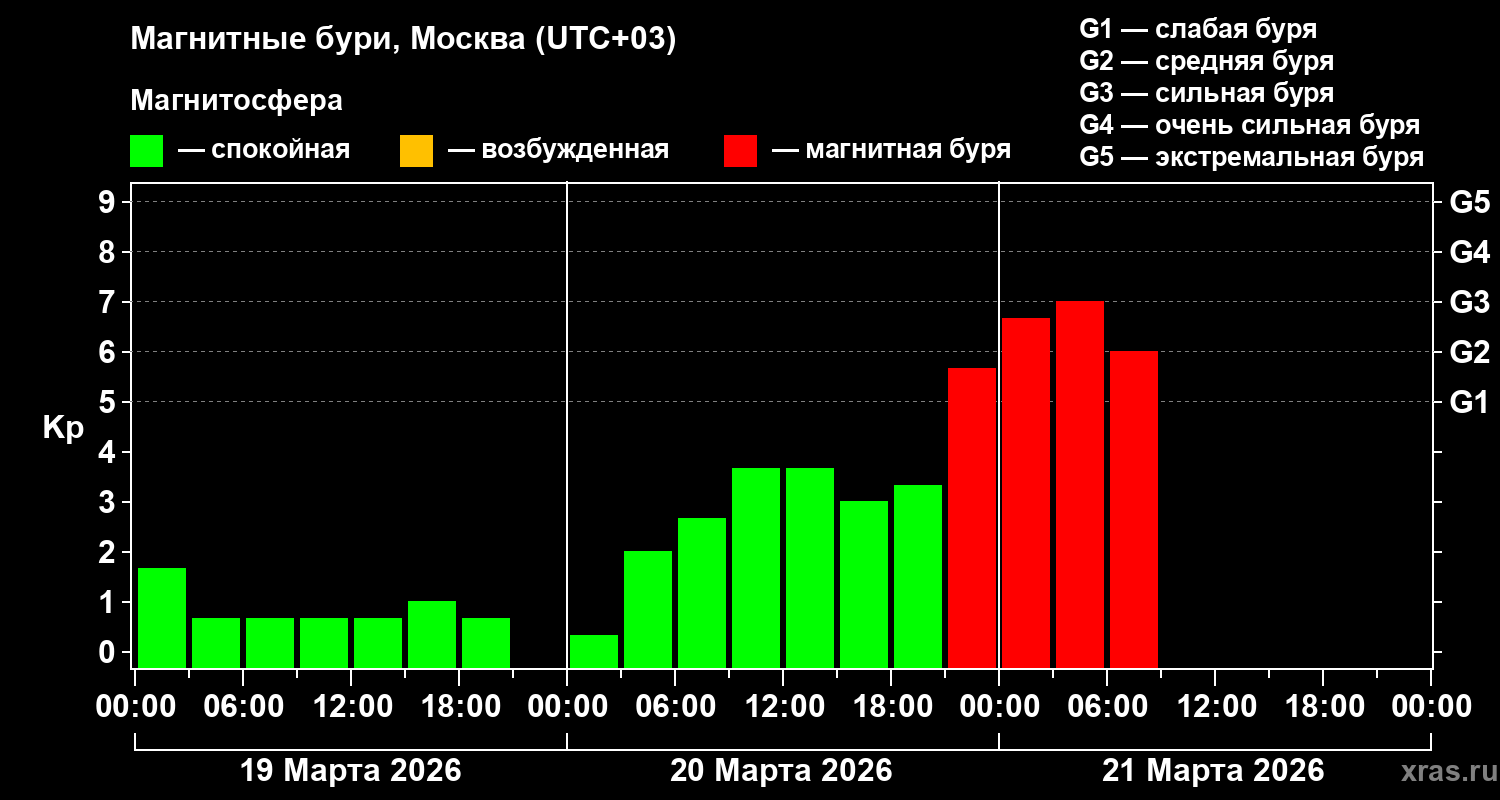
The geomagnetic storm that began yesterday around 08:00 PM UTC has now lasted for approximately 11 hours. Last night, the event crossed the psychologically significant G3 threshold, which separates strong storms from moderate-level events. The last time this happened was just over two months ago—from January 19 to 21, 2026—when one of the strongest storms of the decade was recorded, falling just short of the highest geomagnetic level, G5.
The storm is the result of a plasma cloud ejected by the Sun earlier this week approaching Earth. The plasma's arrival was recorded on Friday morning, but the Earth's magnetic field heroically held in the green zone for almost 24 hours. As mentioned earlier, the graphs began to turn sharply red only towards nightfall. At the same time, an explosive increase in the intensity of the auroras was recorded, peaking between approximately 21:30 and 23:30 UTC, when the auroral oval brightness reached a maximum of 10. Initially, there were doubts that the auroral zone would be captured en masse over the country (the maximum brightness had shifted significantly toward Europe by this time), but a huge number of images were received, not only from the traditional northern and northwestern regions, but also from the central part of the country, including the latitudes of Moscow. Subsequently, during the night and early morning, there were a couple more bursts, but at this point, the auroral oval has already moved toward Canada.
There is currently no reason to stop the storm—plasma parameters and the interplanetary magnetic field near Earth remain at a highly disturbed level. Brief, temporary weakening of pressure on the Earth's field and associated short breaks are possible, but the global geomagnetic storm is forecast to last all weekend. There's a high probability of a return to the intense auroral zone this coming night, from Saturday to Sunday.
Starting Monday, the geomagnetic field is expected to transition from the red to the moderately disturbed yellow zone, with conditions expected to fully return to normal on Tuesday.
We'll be publishing a selection of aurora photographs later.