
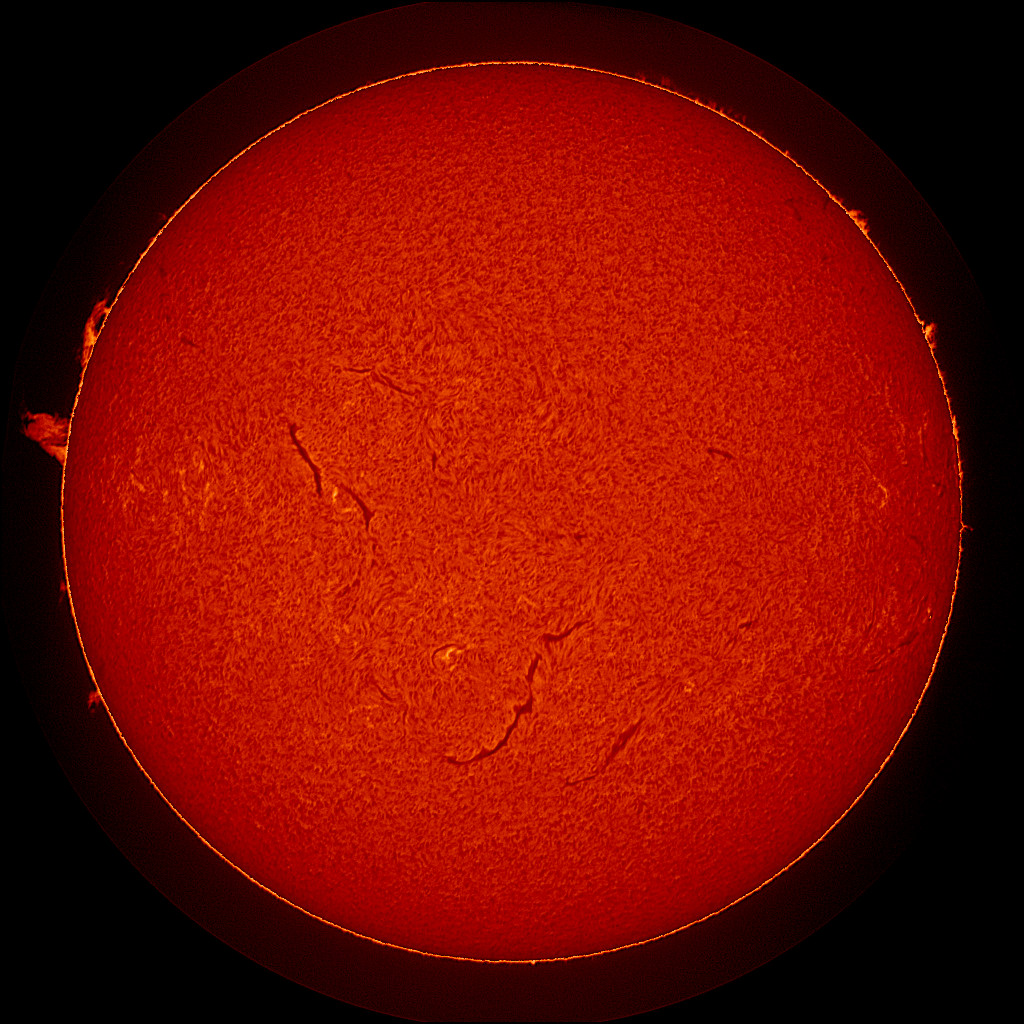
Solar activity—to the dismay of some and the delight of others—continues to set new lows. For the first time since December 2021, not a single solar flare of Class C or higher has been recorded on the star over a four-day period. The last time a lull of this duration occurred was between December 7 and 11, 2021, lasting five days. If flare activity does not resume today, September 17, that record for inactivity will also be broken.
Although much longer pauses in activity are observed during solar minimums, such prolonged breaks—occurring just two years after the cycle's peak—are unusual; they reinforce the impression that the Sun is declining significantly faster than predicted. Solar cycles can, in general, be notably shorter than the typical 11-year duration—sometimes 10 years, or occasionally (though very rarely) around 9. The current Solar Cycle 25 began in December 2019 and is now concluding its seventh year. Given this rate of decline, it could well turn out to be a nine-year cycle. The last time such a phenomenon was observed was in the second half of the 18th century—specifically during cycles 2 and 3, at the very dawn of modern solar observation. However, the current cycle is already anomalous: its rising phase was nearly twice as intense as pre-cycle forecasts had predicted. In this context, it would not be surprising if the declining phase also proved to be anomalous.
It is worth noting that, according to current scientific understanding, a rapid declining phase in a cycle often precedes particularly intense subsequent cycles.