
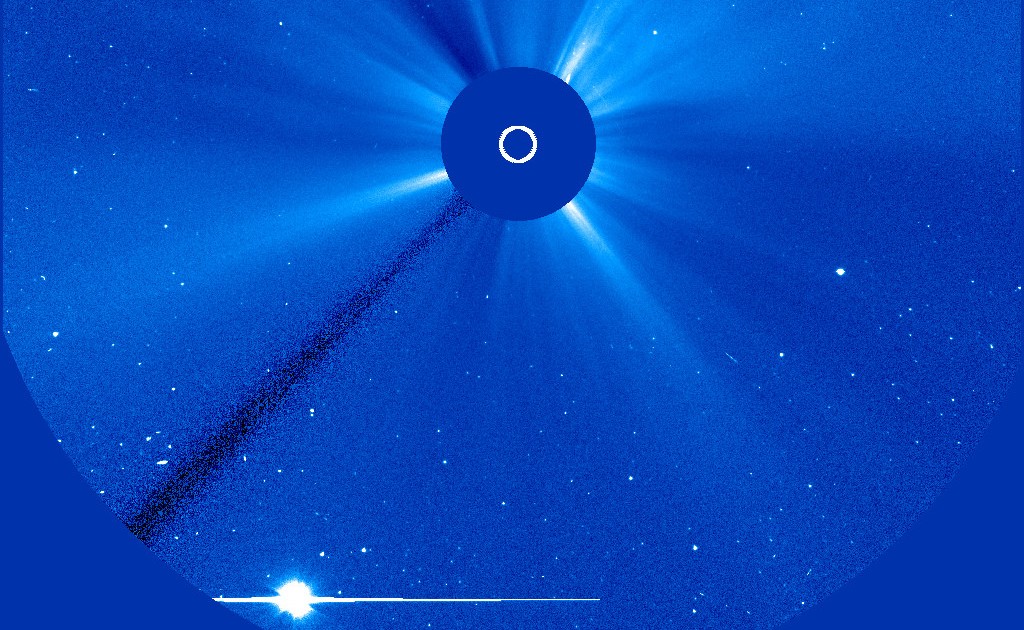
A relatively rare event—the passage of the brightest planet, Venus, between the Earth and the Sun—will take place in two days, on Saturday, October 24, 2026. In astronomy, this event is known as an "inferior conjunction" of Venus; it occurs on average once every 584 days, with the last such occurrence having taken place in March 2025.
During this passage, the distance between Venus and Earth reaches its minimum—approximately 40 million kilometers. For comparison, when the planet is at its greatest distance from Earth, that figure increases to 260 million kilometers.
However, those hoping to catch a glimpse of Venus at its maximum brilliance will have to wait a little longer. At the moment, the planet is too close to the Sun; furthermore, it is currently illuminated from the far side, meaning it appears as a dark body—much like the Moon during a new moon phase. It will become visible to the naked eye starting around the second week of November, when it begins to rise above the horizon at dawn, just ahead of the Sun, as a "morning star." Venus will reach its full, extraordinary brightness in the final days of November, when its luminosity hits an exceptional level—approximately magnitude -5—making it the brightest object in the sky, surpassed only by the Sun and the Moon.
In the meantime, Venus can be observed in images captured by solar coronagraphs operating in space; the planet appeared in these feeds less than 24 hours ago (one such image is attached to this post). On Saturday, the planet will pass directly beneath the Sun in these views. The next inferior conjunction of Venus with the Sun will not occur until 2028.