
Solar Activity
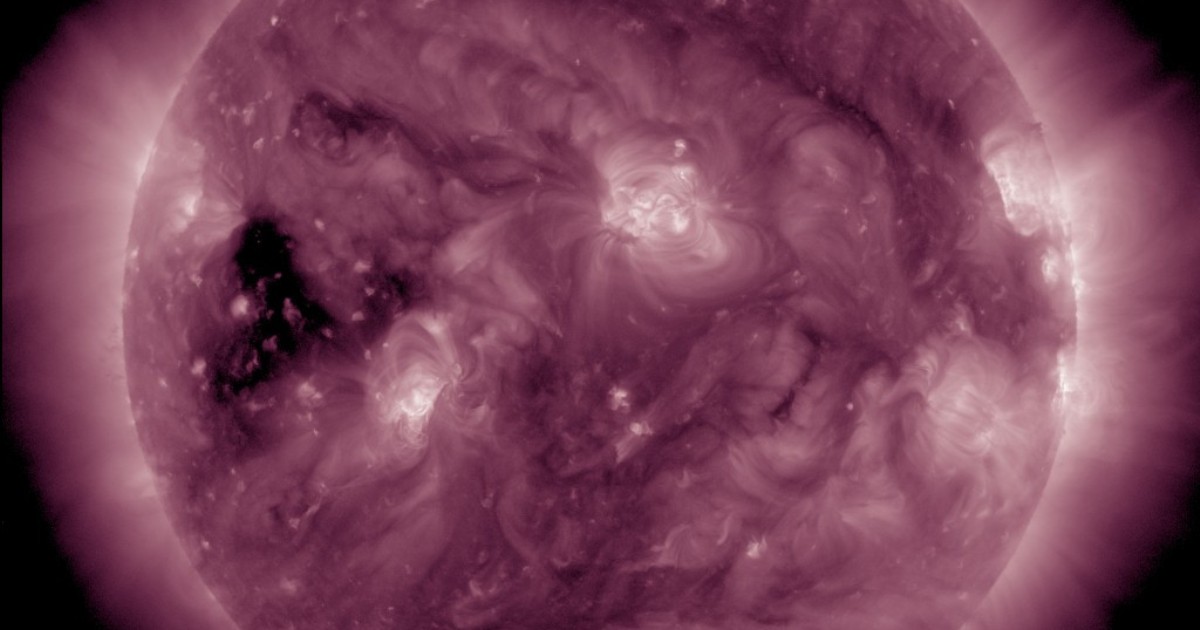
Solar activity is low. Over the past 24 hours, the only deviation from a "flat line" on the solar flare chart was a C9.6-class flare that occurred yesterday midday (14:30 Moscow time). The observed decline appears stable and is set to continue for at least the next two days — that is, throughout the weekend. There are currently about 10 sunspots on the Sun, organized into 5 small groups. None of these possess significant energy; they fall into the alpha and beta categories (the lowest classifications). Given this, there is a strong possibility that by Monday, the activity index will finally reach zero (it currently stands at 4.6 out of 10).
Geomagnetic Activity
A new, small coronal hole has appeared on the left side of the solar disk. Rough estimates suggest it will begin to affect Earth around November 27–28 — not until the following weekend. Before then, the otherwise "all-green" (quiet) geomagnetic index forecast could be interrupted by a small plasma ejection that departed the Sun recently. Calculations indicate a high probability that this material will graze Earth on Monday, November 23, potentially causing minor geomagnetic disturbances. This does not complicate the forecast for the upcoming weekend; as for Monday — we shall see when the time comes.
Brief Summary
Solar activity continues to decline and is forecast to reach zero by the beginning of next week. Geomagnetic activity will remain low over the weekend. Looking ahead to next week, the primary events are expected on Monday (the arrival of a small plasma ejection) and toward the end of the week, when a small coronal hole begins to exert an influence on Earth. In both cases, the impact is expected to be weak to moderate. There is no possibility of severe storms.