
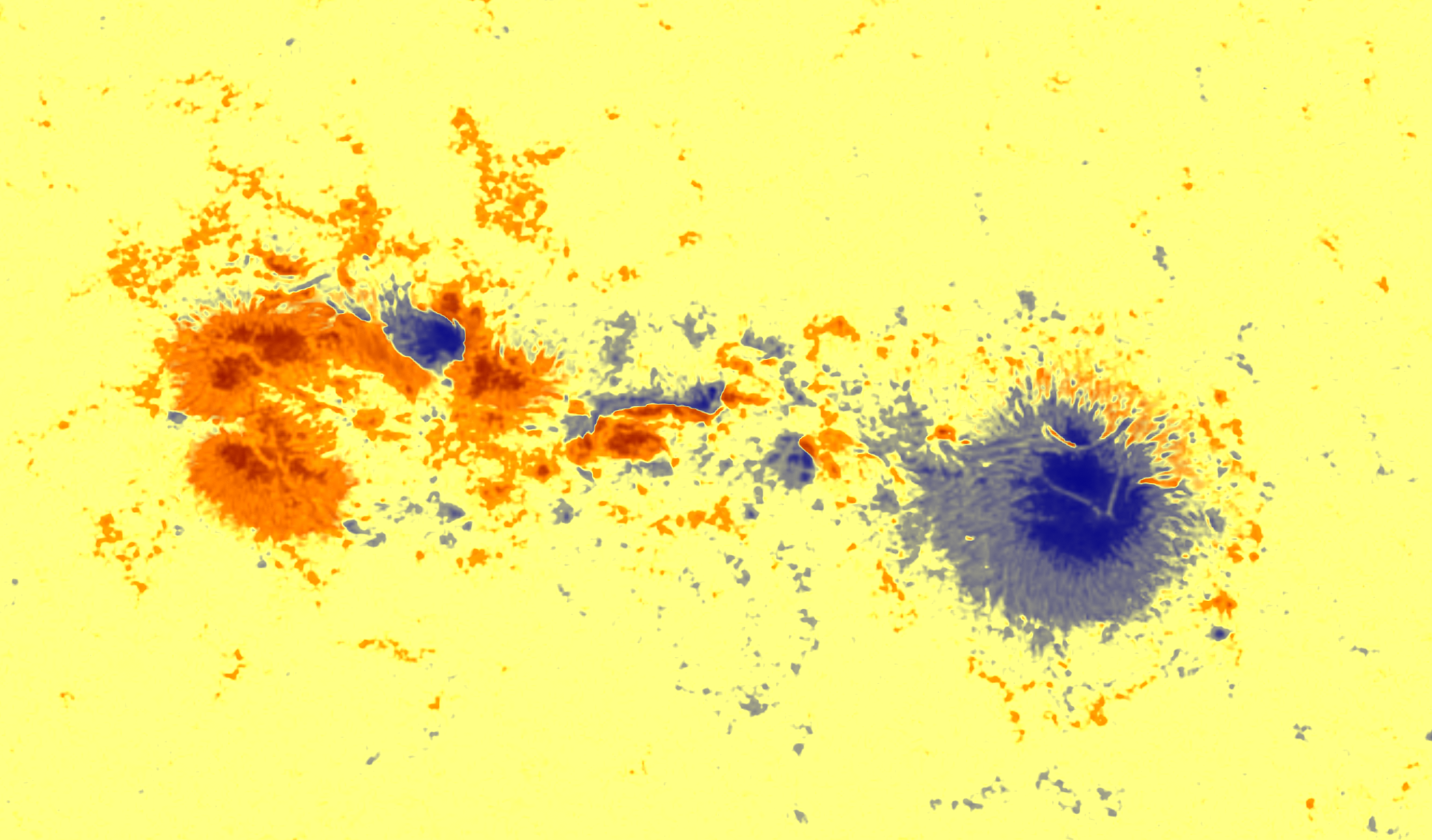
As of midday on February 5, sunspot group 4366, currently located opposite Earth, had already recorded 58 strong M- and X-level flares. This is the second-highest number in the first quarter of the 21st century. In first place, with 64 flares, is sunspot group 3664, observed in May 2024 and responsible, among other things, for the strongest magnetic storm of the last 20 years, which occurred on May 10-12, 2024.
This exceptionally strong surge in activity, which even included a superflare of level X8.1, has so far resulted in only a very limited impact on Earth. For reasons that remain to be determined, solar explosions are virtually unaccompanied by plasma ejections. Without these, any significant impact on Earth's magnetic field is impossible. At the same time, a small amount of matter still escapes into interplanetary space with each flare, which, given their very high rate, is currently saturating the solar wind with plasma and accelerating its speed and temperature. As a result, even in the absence of strong impacts on the planet, a fairly high level of background disturbances is observed, including short-term magnetic storms and bursts of intense auroras.
The active center will remain in the region of direct impacts on Earth for another 1 to 2 days. If even one large plasma ejection occurs during this time, magnetic storms of the G4-G5 magnitude are possible. Otherwise, this region will have to console itself with the prospect of being the most active solar group in the 21st century, a position it will almost certainly occupy by then—it only needs 7 M-wave flares to achieve this.