
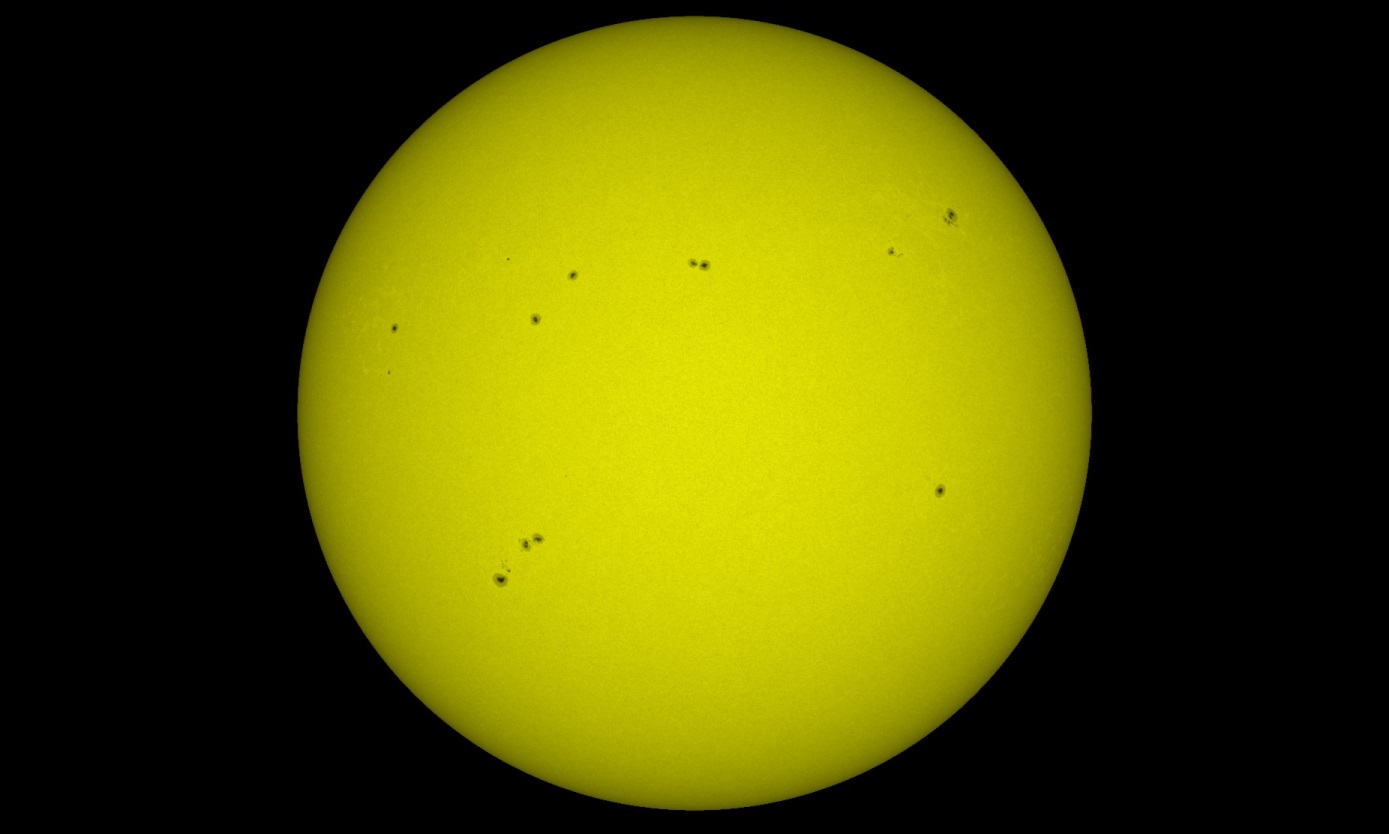
The main event of the past 24 hours was the first high-level X-ray flare on the Sun since February 4, accompanied by a large, high-speed plasma ejection. The direction of the ejection remains a subject of debate, but the general consensus is that the plasma cloud will edge onto the planet, possibly as early as this evening, triggering moderate magnetic storms. At the same time, given that the impact occurs during the hours of darkness, intense auroras are almost certain to begin to be observed. The predicted impact intensity, as is often the case with edge events, varies widely: at some angles, the plasma may not arrive at all, while at others, storms up to G4 are possible. The arrival of solar material, as usual, can be tracked by solar wind graphs, which are measured 1.5 million kilometers from Earth by satellites located at the L1 Lagrange point on the Sun-Earth line. The moment the cloud front passes through these graphs should be marked by strong jumps in parameters, especially in the wind speed and magnetic field induction graph.
In terms of flare activity, it is certainly on the rise. Currently, the interval between the two mass ejections on March 28 and 30 was two days. If this is considered the typical time for energy to accumulate before a new explosion, then the next strong flare can be expected tomorrow. But this is, of course, armchair analysis, although it sometimes yields quite accurate estimates. Mathematical models don't work for two days ahead, and as of today, they give about a 20% probability of a new X-ray flare.